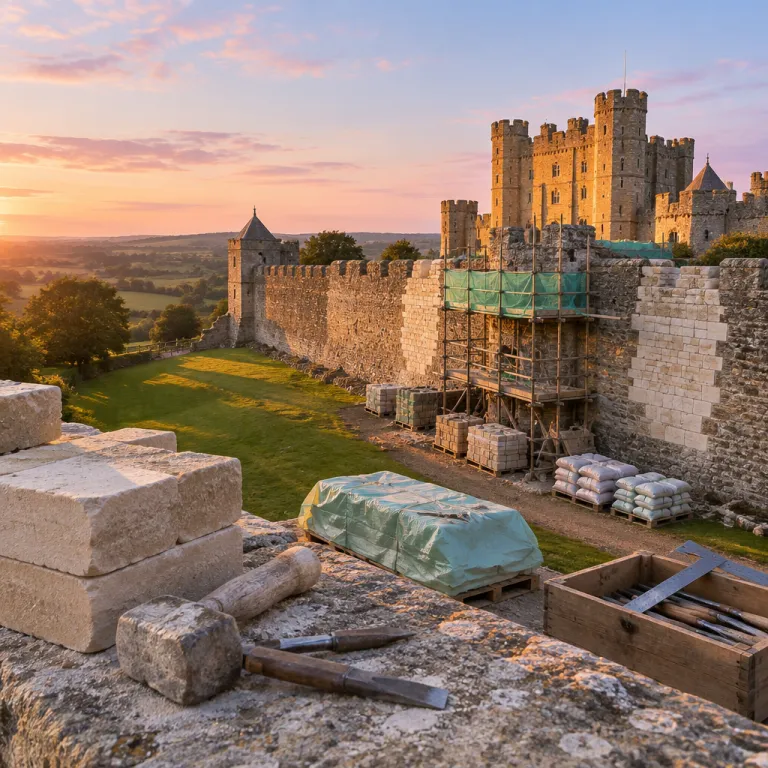
Why your castle stay depends on quiet, constant restoration work
Every atmospheric castle suite rests on centuries of stone that never stop moving. Behind the scenes, a whole world of conservation stonemasonry, structural surveys and heritage craft keeps those walls dry, safe and ready for your arrival. When you book a high end room in a medieval tower, you are also buying into a long restoration story that started generations ago and will continue into the future.
Unlike conventional buildings, historic castles breathe through natural stone and lime mortar joints that absorb and release moisture slowly. If a past repair used hard cement instead of the right mortar mix, the surrounding stone can crack, which then demands careful remedial work by specialist stonemasons. This is why serious conservation programmes often begin with a forensic survey of every stone facade, tracing earlier techniques and failures before any new project phase starts.
For owners, each phase of large scale repair is less a one off project and more a rolling programme of traditional masonry work. A single staircase turret might require months of precision stone selection, hand tooling and conservation grade techniques before guests can safely climb to their suite. When a booking site highlights a property’s heritage credentials, it is worth reading between the lines and asking how much of that castle restoration effort is recent, ongoing and backed by real education training for the next generation.
Lime mortar, natural stone and the science of keeping walls alive
Walk into a vaulted hall where the walls feel dry yet soft edged, and you are feeling the effect of the right mortar as much as the right stone. Traditional lime based mixes allow historic walls built from natural stone to flex, breathe and shed moisture, which is essential for the long term future of fragile historic buildings and scheduled monuments. When a stonemason talks about good restoration, they often mean good mortar first, because the wrong choice can trap damp and quietly destroy centuries of heritage.
Many castles suffered from well intentioned but damaging repairs that used dense cement instead of lime, forcing later restoration work to remove failed patches stone by stone. On a luxury booking page that promises an authentically restored tower suite, that phrase usually hides years of painstaking conservation projects where stonemasons raked out hard joints and re pointed with softer mixes. The same craft skills that shape grand stone facades also govern the invisible joints behind your headboard, keeping your room warm, dry and structurally sound during your stay at a so called fairy tale castle escape described on this detailed castle escape guide.
For travelers who care about genuine stone conservation, asking about mortar is not excessive; it is informed. In the UK, for example, bodies such as the Society for the Protection of Ancient Buildings (SPAB), Historic England and Historic Environment Scotland all recommend lime based approaches for most pre 1919 masonry. Properties that invest in high quality lime work usually collaborate with conservation architects and stonemasons trained in both historic and modern techniques. Their knowledge of stone selection, compatible mixes and cutting edge monitoring technology directly shapes the comfort level you experience in your room, from stable temperatures to the absence of mysterious damp patches on ancient stone facades.
The rare skills behind every safe stair and weather tight turret
Heritage stonemasonry is a niche craft where deep knowledge, slow learning and physical stamina meet in one demanding career. Many castle owners now compete for a shrinking pool of qualified stonemasons whose skills are essential for both small repairs and large scale restoration projects. When you see a perfectly even spiral stair or a parapet that feels reassuringly solid underfoot, you are feeling the result of years of education training and on site practice.
These craftspeople read stone the way sommeliers read wine, spotting flaws, past restoration work and subtle shifts in colour that reveal earlier projects. Their precision in stone selection determines whether a replacement block will weather at the same rate as its neighbours, protecting both the structure and the visual harmony of historic buildings and monuments. On exposed sites such as Scottish clifftop castles or hilltop fortresses near Edinburgh, where a royal castle escape is a popular theme on specialist travel features, that precision can be the difference between a watertight suite and a leaking ceiling.
Because the craft is so specialised, many estates now support apprenticeships to pass skills to future generations of stonemasons. A single master stonemason might guide several younger colleagues through complex restoration work, from carving tracery to rebuilding stone facades with both hand tools and cutting edge technology. As one conservation architect quoted by Historic England notes, “good stone repair is 90% diagnosis and only 10% chisels.” When a booking site highlights a castle’s commitment to heritage, it is worth asking whether that includes investment in future education training, not just a one off masonry project for marketing photographs.
How restoration costs shape your room rate and what you really pay for
Every polished four poster bed in a castle suite sits inside a financial equation dominated by restoration costs rather than décor. Large scale restoration of stone walls, towers and bridges can run into millions, spread across decades and multiple projects that rarely make it into the glossy brochure. For example, recent phases of work at high profile British castles have exceeded £5 million over ten years, largely focused on masonry and roof repairs. When you pay a high nightly rate, a significant share often supports ongoing restoration work that keeps the property structurally sound for future guests.
Owners must balance guest expectations for modern comfort with the realities of historic fabric, which cannot simply be stripped out and replaced. Installing discreet insulation, safe wiring and plumbing inside thick natural stone walls demands both advanced technology and patient craft stonemasonry, often carried out room by room between seasons. This is where traditional masonry skills intersect with digital tools, from laser scanning to moisture sensors that guide where to open up walls and how to protect fragile mortar joints.
For travelers, the most honest properties are transparent about their restoration projects and how these influence pricing. Some estates share detailed guides to recent restoration work, explaining which towers are complete, which projects are planned and how this benefits future generations of guests. When you see a rate that feels high, it can help to ask whether you are simply paying for luxury, or also contributing to the long term future of one of Europe’s most important historic buildings and monuments.
Reading between the stones: how to assess a castle hotel’s heritage claims
Marketing language around heritage can be slippery, especially when every castle hotel claims to be lovingly restored. As a traveler, you can use a few practical checks to gauge whether a property’s masonry and conservation story is deep or decorative. Start with the basics; ask when the last major restoration project took place, which parts of the castle were involved and whether specialist stonemasons led the work.
Serious properties usually talk confidently about stone selection, mortar types and specific restoration projects, rather than vague references to historic charm. They may share case studies of restoration work on stone facades, towers or bridges, sometimes linking to detailed features on topics such as historic paint and period colour choices that complement the underlying stone. When staff can explain how modern techniques and cutting edge monitoring technology protect both guest comfort and long term heritage, you are likely in good hands.
Look too at how a property speaks about future projects and future generations, not just past glories. A credible guide to their conservation approach will mention ongoing education training, apprenticeships and collaboration with conservation bodies such as SPAB or national heritage agencies. The most trustworthy estates treat each stay as part of a long continuum, where your booking supports both present comfort and the survival of irreplaceable stone buildings and monuments for guests yet to arrive.
FAQ
Why do castle hotels need specialist stonemasons instead of regular builders ?
Castle hotels rely on specialist stonemasons because historic stone structures behave differently from modern buildings. Thick natural stone walls, lime mortar joints and centuries of movement require stonemasonry techniques that respect original materials and structural logic. Regular builders trained only in modern concrete and brick can unintentionally damage heritage fabric, so conservation focused skills are essential.
How does proper restoration affect my comfort as a guest ?
Good restoration work directly shapes how warm, dry and quiet your room feels. When stonemasons use compatible stone selection and breathable mortar, walls manage moisture better and reduce issues like damp patches or crumbling plaster. Careful integration of services into stone facades also means safer wiring, more stable temperatures and fewer draughts in historic suites.
Is a higher room rate always a sign of serious heritage investment ?
A high room rate can reflect major restoration projects, but it is not a guarantee. Some properties invest heavily in conservation grade masonry and long term repair, while others focus spending on furnishings and marketing. Asking specific questions about recent restoration work and future projects is the best way to understand what your money supports.
What questions should I ask a castle hotel about its restoration work ?
You can start by asking when the last significant restoration project took place and which parts of the castle were involved. It is also useful to ask whether specialist stonemasons and conservation architects led the work, and what plans exist for future generations of guests. Properties that answer clearly about materials, techniques and education training usually take their heritage responsibilities seriously.
Can modern technology really help preserve medieval stone castles ?
Modern technology now plays a crucial supporting role in heritage conservation. Tools such as laser scanning, moisture sensors and structural monitoring systems help guide precision interventions in fragile stone and mortar. When combined with traditional craft stonemasonry, this cutting edge approach allows owners to plan restoration projects more accurately and protect historic fabric with minimal intrusion.