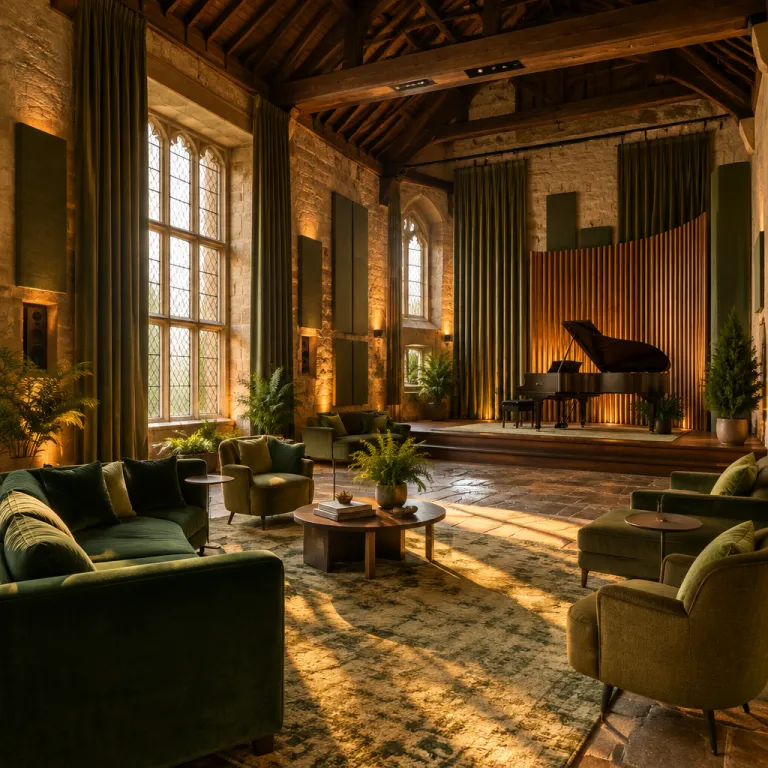
Why castle hotel acoustics feel different from modern stays
Step into a serious castle hotel and the first thing you notice is the feel of the silence. Thick stone walls, deep embrasures, and heavy doors create a level of acoustic comfort that most contemporary hospitality properties chase with layers of engineered sound control. For couples used to thin partitions and corridor noise, this shift in sound can redefine what a premium guest experience means.
From an engineering perspective, castle hotel acoustic design and sound privacy begin with mass and depth. Historic walls often exceed 60 cm in thickness; under the mass-law of sound insulation, this typically corresponds to airborne sound reduction in the range associated with higher Sound Transmission Class (STC) ratings. In modern construction, many standard hotel room partitions sit around STC 45–50, while dense masonry walls of comparable thickness can reach the mid‑50s or above in laboratory tests, depending on exact build‑up and finishes. These figures are indicative rather than property‑specific, but they explain why you hear only a muted thud instead of your neighbour’s late‑night television in adjacent rooms and suites.
Stone, however, is a double‑edged material for acoustics. It blocks external noise between rooms and public spaces, yet its hard surface can increase reverberation time in corridors, stairwells, and grand dining rooms. The best hospitality design teams now work with acoustic consultants to balance this, adding soft materials, discreet sound‑absorbing finishes, and fabric‑wrapped wall elements so that sound quality matters as much as lighting or linens in the overall experience of each space.
The physics of stone walls, high ceilings, and real sound privacy
When you book a castle stay for romance, you are also booking physics. Dense masonry, high ceilings, and deep window reveals create a natural acoustic environment that filters sound in ways drywall never will. The result is a room where the outside world feels distant, even when you are only a few metres from a busy courtyard or event space.
In practical terms, castle hotel acoustic comfort and sound privacy rest on three structural pillars. First, the wall construction: heavy stone and lime mortar provide substantial transmission loss across a wide frequency range, so bass from live music in the great hall is significantly reduced before it reaches your room. Second, the floor and ceiling build‑up, often timber over stone vaults, breaks up vibration paths and improves acoustic separation in stacked rooms and meeting rooms. Third, the sheer volume of spaces with high ceilings allows sound energy to disperse, which reduces perceived noise even before any modern acoustic treatment is added.
This structural advantage does not remove the need for careful hospitality design. Conservation architects now collaborate with acoustic engineers to integrate custom absorptive panels, fabric‑wrapped linings, and fire‑rated materials behind tapestries or carved screens, preserving heritage while refining sound. For a deeper look at how these teams balance safety, comfort, and authenticity, see our analysis of the conservation architect’s dilemma in castle hotels, which shows why acoustics matter as much as plumbing or climate control in serious restorations.
From echoing halls to intimate rooms: how design teams tune the sound
Left untouched, a medieval hall can sound magnificent for choral music yet harsh for dinner conversation. Long reverberation time in stone‑lined spaces blurs consonants, so a romantic whisper across the table becomes a wash of sound instead of a clear phrase. That is why serious castle properties now treat acoustics as a core part of hospitality, not a technical afterthought.
Design teams start by mapping how each space should feel and sound for the guest. Grand event spaces and dining rooms may keep a slightly live acoustic for atmosphere, while smaller rooms, suites, and meeting rooms aim for tighter acoustic control and higher speech clarity. To achieve this, they combine large‑format ceiling absorbers hidden in timber coffers, fabric‑wrapped wall panels behind tapestries, and soft furnishings that add both visual warmth and measurable sound absorption.
In some castles, Danish and Nordic designers have been brought in to soften austere interiors with natural materials that work beautifully for acoustic treatment. Wool rugs, linen drapes, and upholstered seating in layered fabric reduce noise without diluting the historic character of the room. A recent refurbishment at a Scottish property, for example, reportedly reduced dining‑room reverberation time from around 1.8 seconds to close to 1.1 seconds after adding concealed acoustic treatment and heavier textiles; these figures are typical of well‑executed upgrades rather than a published laboratory study. For a detailed look at how this plays out in practice, our feature on how Danish designers are reshaping castle interiors shows how contemporary hospitality design can respect stone while still delivering modern acoustic comfort in both singular room layouts and larger public spaces.
Silence as a luxury amenity: what to ask before you book
For couples planning a castle escape, the real question is not whether stone walls exist, but how well the property has tuned its acoustics. Some estates now promote castle hotel acoustic design and sound privacy as explicitly as they promote spa menus or wine lists. Others rely on the architecture alone, which can leave you with echoing corridors, clattering service noise, or live music bleeding into your room late into the night.
Before you commit, ask the reservation équipe very specific questions about acoustic design and noise control. Inquire about room acoustics, whether acoustic panels or other sound‑absorbing treatment have been added, and how far your preferred room category sits from event spaces or dining rooms that host live music. If you are planning a celebration, ask whether meeting rooms and the main event space have been tuned for speech clarity, and whether wall panels or fabric‑wrapped elements are used to manage reverberation time during speeches.
Silence also matters in wellness areas, where spa design trends now place acoustic comfort alongside lighting and thermal experiences. Some castle hotels have invested in ultra‑quiet mechanical systems, such as ground‑source heating and low‑noise ventilation, to remove one of the last mechanical sound sources in thick‑walled buildings. Industry case studies and Quiet Mark listings show how these systems can significantly reduce background noise compared with conventional plant. When a property has gone this far, you feel it the moment you close the room door and the outside sound falls away, leaving only the low murmur of a fire and the soft rustle of fabric in a genuinely private space.
Events, music, and multiuse spaces: when acoustics matter most
Castle hotels are no longer just about solitary stays; they are serious venues for weddings, corporate retreats, and intimate concerts. Each of these formats places different demands on acoustic control and hospitality design. A great hall that flatters a string quartet may be too live for a keynote speech, while a stone chapel that feels magical for vows might be unforgiving for amplified sound during a reception.
Experienced properties now treat every event space as a hybrid between performance venue and hotel lounge. Acoustic engineers use tools such as sound level meters and modeling software to predict how sound will behave in high ceilings, alcoves, and interconnected rooms, then specify custom absorbers, decorative wall linings, and soft materials to keep reverberation time within a comfortable range. Some even borrow techniques from recording studios, adding concealed acoustic treatment in timber ceilings or behind carved screens so that live music can fill the space without overwhelming conversation in adjacent rooms.
If you are planning a castle wedding or retreat, ask how the property manages sound between the main event space, nearby rooms, and late‑night lounges. Our guide to elegant castle hotels for weddings highlights estates that have invested in both acoustic design and guest circulation, so music, speeches, and private conversations can coexist. As one acoustic specialist notes in the technical guidance shared with leading properties, “Do stone walls affect room acoustics? Yes, they can enhance or dampen sound depending on thickness and finishes. Can modern acoustics be integrated into historic buildings? Yes, with careful planning and design. Are castle hotels suitable for events requiring good acoustics? Yes, many are optimized for such events with measured STC (Sound Transmission Class) and RT60 (reverberation time) targets used as design benchmarks.”
How to read between the lines of marketing when booking
Marketing language around quiet rooms and tranquil spaces has become so common that it risks losing meaning. For castle hotels, the difference lies in whether they can explain how castle hotel acoustic design and sound privacy are actually achieved, not just promised. As a traveler, you should look for specific references to materials, layouts, and acoustic treatment rather than vague claims of serenity.
Start with the basics: does the property mention acoustic design, acoustic panels, or fabric‑wrapped wall panels in its renovation notes or design stories? Are there references to high ceilings being balanced with soft furnishings, or to fire‑rated acoustic materials used behind historic finishes to keep both safety and acoustic comfort high? When a hotel talks about integrating smart acoustic systems, sustainable sound‑absorption materials, or collaboration with acoustic engineers, you can be more confident that sound quality matters in daily operations, not just in sales copy.
Guest reviews also provide useful acoustic data points if you read them with care. Look for repeated comments about corridor noise, live music bleed, or the peaceful feel of specific room wings and floors, then cross‑check those remarks with floor plans or room descriptions. When you see consistent praise for quiet rooms near busy event spaces, or for the way public spaces manage crowd noise, you are likely looking at a property where sound, design, and hospitality have been woven together with the same care as the fabrics on the walls.
FAQ
Do stone walls always guarantee a quiet castle hotel room?
Thick stone walls provide excellent separation between rooms, but they do not automatically solve every acoustic issue. Corridors, doors, and high ceilings can still transmit sound if they are not supported by acoustic treatment and thoughtful hospitality design. When booking, ask specifically about door construction, soft furnishings, and any added acoustic panels in your preferred room category.
How can I choose the quietest room in a castle hotel?
Request a room away from main staircases, lifts, and event spaces such as dining rooms or ballrooms. Ask the reservations équipe which rooms benefit most from the building’s natural acoustics and any modern acoustic design upgrades. Corner rooms and suites in secondary wings often combine strong sound insulation from stone walls with lower corridor traffic.
Are castle hotels suitable for events that need good speech clarity?
Many castle hotels now work with acoustic engineers to tune their main event space, meeting rooms, and chapels for both speech and music. Techniques include adding discreet wall panels, fabric‑wrapped acoustic elements, and soft furnishings to manage reverberation time. When planning an event, ask for examples of previous conferences or weddings where microphones and live music were used successfully.
Can modern acoustic systems be added without damaging historic interiors?
Carefully planned interventions allow properties to integrate acoustic panels, sound‑absorption materials, and smart control systems while preserving original stone and timber. Designers often hide acoustic treatment behind tapestries, carved screens, or ceiling coffers, using fire‑rated materials that meet current codes. This approach respects conservation priorities while significantly improving guest experience in both rooms and public spaces.
What should I ask a castle hotel if acoustics are a top priority for my stay?
Ask whether the property has carried out recent acoustic analysis or upgrades, and whether specific wings or room types are recommended for maximum acoustic comfort. Clarify how they manage noise from live music, weddings, or late‑night bars, especially if you are staying during peak event periods. A confident, detailed answer usually signals that acoustics matter operationally, not just in marketing language.