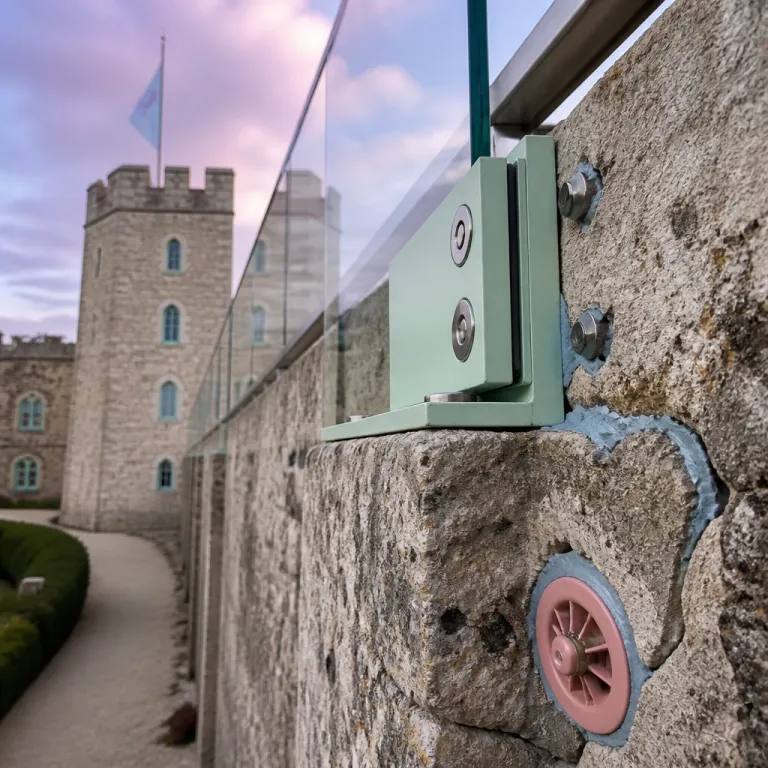
The quiet tension at the heart of castle hotel restoration
Every serious castle hotel restoration heritage conversion begins with a contradiction. Conservation architects are asked to protect centuries of history while creating a luxury hotel that guests will actually book and recommend. The result is a constant negotiation between stone, regulations, and the expectations of modern travelers.
Across Europe and beyond, castles and chateau properties sit under strict heritage regimes that shape every decision. In the United Kingdom, a Grade I or Grade II listed building status can restrict how owners insulate walls, insert lifts, or even route a discreet fire escape, and similar protections apply to many french castles in France and other countries. For travelers, this means that the most atmospheric castle hotels are often the ones where you feel the compromises most clearly in the rooms and corridors.
The regulatory framework is not designed around hospitality, yet it defines the castle hotel experience. Conservation Architects, Castle Owners, and Regulatory Authorities form a triangle of sometimes competing priorities that will influence everything from the size of your bathroom to whether a swimming pool can be added within the historic walls. Guests rarely see the planning files, but they feel the outcomes in the way a building breathes, creaks, and occasionally drafts at night.
What listed status really means for your stay
When a castle or chateau is protected as a listed building, the façade and key interiors become almost untouchable. Structural beams, staircases, great halls, and even minor stone details can be locked in place by cultural heritage rules that aim to preserve authenticity. For castle hotels, this often means that heating, wiring, and plumbing must be threaded invisibly through centuries old fabric, which can limit how far a castle hotel restoration heritage conversion can go in delivering seamless comfort.
Thermal insulation is one of the sharpest pain points in these properties. Owners and investors owners know that thick stone walls leak heat, yet external cladding or double glazing may be prohibited because it would alter the historic character of the building. Guests in winter might notice cooler corners in some rooms, while in summer the same stone that once defended against siege now helps stabilize temperatures in a way that feels surprisingly gentle and unique.
Accessibility and fire safety add another layer of complexity to castle hotels. Installing lifts, ramps, or compliant fire escapes in a medieval castle or a french chateau can require invasive interventions that regulators resist, so architects often hide new routes behind timber panelling or within former service spaces. The result is a maze of subtly adapted circulation paths that will keep you safe, but may not always feel as straightforward as in newly built luxury hotels or a contemporary star hotel in a city center.
Adaptive reuse in practice: from Galgorm Castle to Windsor and Amberley
Look closely at the best castle hotel restoration heritage conversion projects and you see the same design playbook, executed with varying degrees of restraint. At Galgorm Castle in Northern Ireland, a restoration budget of around GBP 14 million funded structural reinforcement, reinstated historic paths, and reconnected the estate to the UNESCO linked landscape at Gracehill. That investment did more than create a luxury hotel ; it generated construction jobs, permanent roles, and new revenue streams that help secure the long term future of the property.
Castle Hotel Windsor, redesigned by 3DReid, offers a different lesson in adaptive reuse. Here, the original architecture frames a modern hospitality program where Penningtons restaurant, named for early innkeeper George Pennington, sits behind carefully preserved façades and period details. The project shows how castle hotels and historic town properties can layer contemporary comfort over deep history without erasing the sense of place that guests travel for, much like the sensitive palace conversion explored in this analysis of Budapest’s Klotild Palace as a 102 room St. Regis.
Amberley Castle in England pushes the conversation into sustainability. The property holds a Green Tourism Gold certification while maintaining its medieval curtain walls, integrating solar energy, waste minimisation, and careful sourcing within tight heritage constraints. For travelers, this means you can sleep inside a fortified castle and still feel aligned with contemporary environmental values, even if the swimming pool or spa facilities sit slightly apart from the oldest structures to respect the listed building envelope.
How technology quietly shapes your castle stay
Behind the scenes, many castle hotels now rely on 3D laser scanning and digital twins to understand how their buildings move, breathe, and age. These tools allow Conservation Architects and engineering firms to test interventions virtually before touching a single stone, which is crucial when a castle hotel restoration heritage conversion must satisfy both regulators and demanding guests. Structural reinforcement, modern utilities, and compatible materials are all modeled in advance to avoid surprises that could damage irreplaceable heritage.
Climate monitoring through digital twins has become especially important in older castles and chateau properties. Subtle shifts in humidity can affect timber panelling, plaster, and historic artworks, so owners use sensors to fine tune heating and ventilation without overloading fragile systems. Guests may simply feel that their rooms are comfortable and stable, unaware that a quiet layer of technology is constantly adjusting the environment to protect both them and the building.
These innovations do not remove the need for craftsmanship ; they sharpen it. Traditional stonemasons, carpenters, and plaster specialists still repair and adapt castle hotels, but now they work with precise data that shows where stress lines run and where moisture gathers. For travelers, this blend of old and new is what makes a stay in a castle hotel or a chateau in France feel like transformed luxury rather than a themed set, even when the Wi Fi signal has to bend around metre thick walls.
Where modern comfort wins and heritage quietly loses
Every castle hotel restoration heritage conversion involves a moment when someone decides that comfort will trump purity. Bathrooms are the most obvious battleground, because medieval castles and early chateau residences were never designed for en suite living. To create the private rooms that guests now expect in luxury hotels, architects often carve bathrooms from former closets, service corridors, or even slice through thick walls that once carried tapestries.
Heating and cooling systems create another set of compromises in castle hotels. Underfloor heating may be threaded beneath new stone in public spaces, while radiators hide behind panelling in guest rooms to avoid visual clutter that would jar with the history of the building. In some projects, the need for efficient systems has led to suspended ceilings or boxed in beams that subtly flatten the drama of great halls, a trade off that you will notice if you care about original volumes and sightlines.
Fire safety can be even more intrusive in a listed building. Modern codes require protected escape routes, fire doors, and detection systems that rarely align with medieval planning, so castle owners sometimes accept visible compromises such as new stair towers or glazed links between wings. The most sensitive projects, like the Grade I conversion of Admiralty Arch in London into a Waldorf Astoria examined in this detailed report on what a Grade I conversion delivers, show how far you can go without overwhelming the original architecture, but not every castle hotel reaches that level of finesse.
The cost multiplier guests rarely see
Heritage constraints do not just shape aesthetics ; they inflate budgets dramatically. Average annual maintenance costs for large historic houses in the United Kingdom can reach around GBP 160,000, and that is before you add the premium for specialist trades and conservation grade materials. For castle hotels, this means room rates must carry not only service and staffing but also the ongoing cost of keeping centuries old structures safe, dry, and operational.
Adaptive reuse projects often face a cost multiplier compared with unrestricted new builds. Every time a contractor opens a medieval wall or a vaulted ceiling, there is a risk of discovering hidden defects that require bespoke solutions rather than standard products. Guests who appreciate the depth of history in a castle hotel or a chateau will understand why a star hotel rating here feels different from a glass tower in a financial district, because the revenue from each stay feeds directly into the survival of the heritage.
Financial viability is not theoretical ; it determines which castles remain open to the public. One historic property, Dalhousie Castle, reportedly increased in value by 124 percent over an eleven year period after sustained investment and repositioning as a hotel. That kind of uplift shows why investors owners are willing to back complex castle hotel restoration heritage conversion schemes, but it also explains why some projects push harder on commercialisation than purists might like.
When character is erased: failed conversions and over commercialisation
Not every castle hotel restoration heritage conversion respects its own foundations. Some projects chase revenue so aggressively that they strip away the very atmosphere that made the castle or chateau desirable in the first place. Guests arrive expecting a unique experience and instead find generic interiors that could belong to any chain hotel, with only a token stone wall left exposed behind the reception desk.
The most common misstep is over renovating the rooms. When original beams are boxed in, fireplaces removed, and proportions standardised to fit a brand template, the castle hotel becomes a star hotel in costume rather than a true expression of cultural heritage. You feel it when corridors are perfectly straight, when doors align too neatly, and when the patina of age has been sanded into a smooth, forgettable finish that will photograph well but tell you nothing about history.
Another red flag is the careless addition of amenities. A swimming pool dropped into a former moat without landscape sensitivity, or a spa wing that overwhelms the main building, can tip the balance from transformed luxury to theme park. The best castle hotels integrate wellness facilities in outbuildings or discreet new structures, sometimes drawing inspiration from holistic retreats such as those profiled in this guide to the best holistic wellness resorts and retreats, where the setting supports rather than competes with the core architecture.
How to read between the stones as a guest
As a traveler, you can spot thoughtful castle hotel restoration heritage conversion by looking for friction. Slightly uneven floors, thick doors, and idiosyncratic room layouts usually signal that the building has been allowed to speak, even as modern comforts are layered in. When everything feels too smooth, you may be staying in a property where heritage has been flattened to fit a brand narrative.
Pay attention to how public spaces are handled. A great hall that still functions as a social heart, with original stone, timber, and perhaps a working fireplace, suggests that owners value history as more than a marketing hook. Conversely, if the most historic rooms have been carved into back of house areas or aggressively subdivided into small rooms, the castle hotel may have sacrificed long term character for short term revenue streams.
Listen also to how staff talk about the property. When team members can explain the history of the castle, the evolution of the chateau, and the logic behind design decisions, you are likely in a place where Conservation Architects and castle owners have worked closely with heritage organizations. If the narrative never moves beyond generic luxury hotel language, the building’s story may have been sidelined in favour of a more conventional hospitality script.
Case study lens: from Irish fortresses to French châteaux
Some castle hotels manage the conservation architect’s dilemma with unusual clarity. Ashford Castle in Ireland, for example, layers a five star hotel service culture over a fortress that has grown and shifted for centuries, yet still feels coherent. Guests move through rooms that respect original proportions, with modern comforts integrated so discreetly that the castle hotel restoration heritage conversion reads as evolution rather than reinvention.
In France, properties such as Château de Bagnols and Château du Theil show how french chateau architecture can absorb hospitality without losing its agricultural and defensive roots. At Château de Bagnols, the moat, towers, and stone courtyards frame a luxury hotel experience that leans into wine, gastronomy, and landscape, while at Château du Theil the focus may tilt more toward intimate stays and regional culture. Both châteaux illustrate how castle hotels in France can use wine tastings, local produce, and carefully curated offers to build revenue without overwhelming the heritage.
Personalities matter in this space, and figures like Francis Malaquis have helped shape the conversation around how historic properties are repositioned. Castle owners and investors owners who take a long view understand that diversified revenue streams, from events to wine programs to carefully managed day visitors, are essential to maintaining properties that cost so much to heat, repair, and staff. For travelers, this means that your room rate, your dinner, and even your glass of wine all contribute directly to the survival of the castle or chateau you are enjoying.
What to look for when booking a heritage stay
Before committing to a castle hotel, read beyond the glossy images. Verify authenticity of castle hotels, check for modern safety features, and respect preservation efforts if you want your stay to support responsible stewardship rather than superficial theatrics. Reviews that mention discreet modern amenities, knowledgeable staff, and visible conservation work usually signal a castle hotel restoration heritage conversion that has been handled with care.
Ask practical questions about rooms and facilities. Not every castle or chateau will offer air conditioning, lifts, or a large swimming pool, and in some listed building contexts these absences are a sign of integrity rather than neglect. If you understand the constraints that cultural heritage protections impose, you can choose whether you prefer a more rugged, historically expressive experience or a smoother, more standardised luxury hotel stay.
Common challenges in converting castles to hotels include balancing historical preservation with modern safety and comfort standards, and castle hotels maintain authenticity by integrating modern amenities discreetly and using compatible materials, while with proper restoration and management they can be profitable. Those three realities frame almost every decision you will encounter as a guest, from the thickness of your bedroom walls to the route you take to breakfast. Knowing this, you can approach each castle hotel restoration heritage conversion not just as a place to sleep, but as an active chapter in the ongoing story of the building.
FAQ
How do castle hotels balance authenticity with modern comfort ?
Most castle hotels work with Conservation Architects to identify which elements of the castle or chateau are non negotiable and which can be adapted. Modern utilities such as heating, plumbing, and wiring are usually concealed within existing voids or new linings, while key historic spaces remain visually intact. Guests experience contemporary comfort in rooms and public areas, but the underlying structure and character of the building are preserved as far as regulations and safety allow.
Why are some castle hotel rooms smaller or more irregular than in city hotels ?
Historic castles and châteaux were not designed around modern room modules, so architects must work within existing walls, towers, and staircases. Creating en suite rooms often means combining former servants’ quarters, storage spaces, or parts of larger chambers, which leads to irregular layouts and varied sizes. These quirks can feel charming or inconvenient depending on your expectations, but they are usually a direct result of respecting the original building.
Are castle hotels generally accessible for guests with reduced mobility ?
Accessibility in castle hotels varies widely because listed building protections can limit structural changes such as lifts or ramps. Many properties provide accessible rooms in less constrained wings or newer additions, while public areas in the oldest parts of the castle may remain challenging. If accessibility is essential for your trip, contact the hotel in advance for detailed information about routes, room options, and any support the équipe can provide.
Do castle hotels cost more than comparable luxury hotels ?
Rates at castle hotels are often higher than at conventional luxury hotels with similar star ratings, because maintenance and restoration costs are significantly greater. Owners must fund ongoing conservation, specialist repairs, and higher energy use in large stone buildings, all while meeting modern safety and comfort standards. When you pay a premium for a castle stay, a meaningful share of that revenue usually supports the long term preservation of the property.
How can I tell if a castle hotel is managing its heritage responsibly ?
Responsible castle hotels are transparent about their restoration work, often sharing details about conservation projects, partnerships with heritage organizations, and sustainability initiatives. Look for evidence of sensitive design, such as preserved great halls, original materials, and discreet modern interventions rather than aggressive remodelling. Reviews that highlight knowledgeable staff, strong sense of history, and visible care for the building are good indicators that your stay will support, rather than undermine, the site’s cultural heritage.