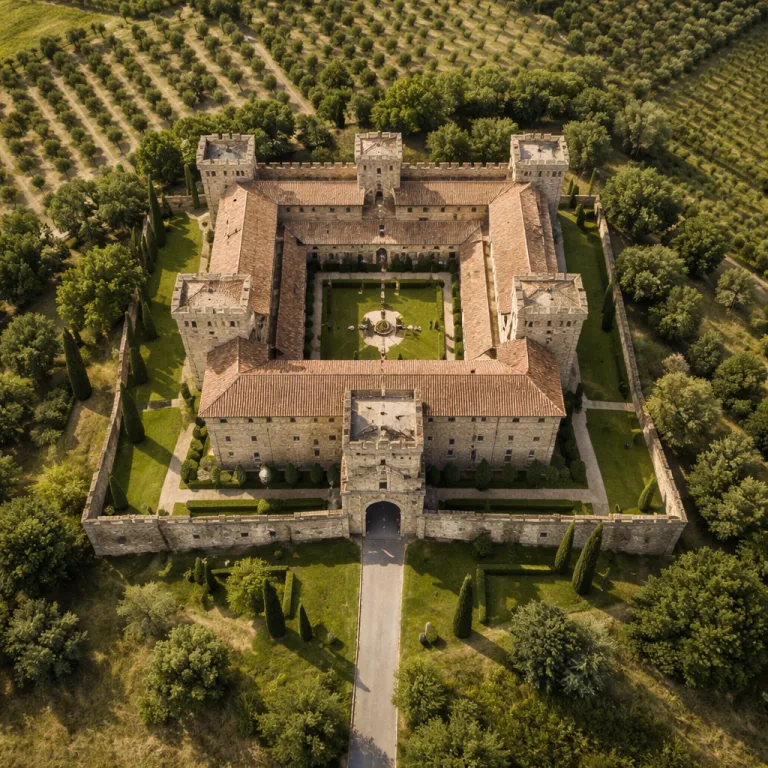
Why the Spain Paradores castle hotel network is different from other castle stays
The Spain Paradores castle hotel network sits in a category of its own. Where many independent castle hotels in Spain trade on romance and uneven service, every parador is operated by Paradores de Turismo de España, a state-owned company with a clear mandate to protect heritage and support tourism. That government backing means the properties are located in historic castles, monasteries, palaces, and natural reserves while still meeting consistent four-star standards across the country.
For travelers used to variable quality in European castle hotels, this consistency is the real luxury. A parador in Málaga on the Costa del Sol, a parador in inland Castilla y León, and a parador in green northern Spain will all share baseline service levels, safety protocols, and room comfort, even if the architecture and atmosphere differ dramatically. According to the Paradores 2023 annual report, the network currently operates 100 hotels with 6,051 rooms, so you can plan a multi-stop itinerary through Spanish history without gambling on unknown properties each night.
The paradores system also exists to support regions that once lacked quality accommodation. Many historic hotels in the chain are located in small towns where the only other options are simple guesthouses, which makes the parador the natural base for business-leisure travelers extending a work trip into a long weekend. When you book one of these castle-style stays you are not just choosing a monument; you are buying into a national strategy that uses hospitality to preserve landmarks and boost local economies.
How government backing shapes quality, pricing, and sustainability
Because Paradores de Turismo de España is state owned, the Spain Paradores castle hotel network operates under a different logic from private castle hotels. The objective is not only profit but also heritage preservation and regional development, which explains why you find a parador located in a remote castle in Castilla-La Mancha as readily as a parador located beside the Cantabrian Sea. This model keeps nightly rates surprisingly moderate for the level of history on offer, with many paradores averaging around one hundred fifteen euros per night including parking and access to monumental grounds, based on 2023–2024 published tariffs sampled across shoulder and high seasons.
Government oversight also underpins the sustainability agenda that now shapes new parador projects and renovations. Spain’s Sustainable Tourism Strategy 2030, approved by the Council of Ministers in 2021 and available through the Ministry of Industry and Tourism, ties future paradores development to green building standards, with tax incentives for properties that reduce emissions, improve energy efficiency, and protect their surrounding landscapes. For a traveler choosing between independent castle hotels and the Spain Paradores castle hotel network, this means you can expect more systematic investment in insulation, efficient heating, and sensitive lighting, rather than ad hoc upgrades.
There is a trade-off to this model, and it matters if you are used to ultra-private estates. Some paradores, especially the best-known historic hotels such as the Parador de León in the former monastery of San Marcos, can feel more institutional than intimate, with clear signage and conference facilities alongside cloisters and chapels. Yet for many business-leisure guests this balance is ideal, offering reliable Wi‑Fi and meeting rooms within walls that once hosted Santo Domingo or sheltered a medieval rey católico. As the official website puts it, “Paradores combines cultural heritage with modern comfort to make Spain’s history accessible to today’s traveler.” If you value heritage with structure over fantasy with risk, the paradores approach will likely suit you better than some privately run castles that we review in culture-led hospitality case studies such as this in depth look at a revitalised Irish estate.
Signature castle locations: from Toledo to Santiago de Compostela
The Spain Paradores castle hotel network is at its most compelling in fortified towns where stone walls still define the skyline. In Toledo, the parador is located on a hill across the river, giving some of the most cinematic panoramic views of any Spanish city, with the Alcázar and cathedral rising above the Tagus. Rooms here are not inside a medieval keep, but the terrace and public spaces deliver the kind of wide-angle cityscape that many independent castle hotels cannot match.
Far to the northwest, the Parador de Santiago de Compostela, officially called Hostal dos Reis Católicos, anchors the Obradoiro square beside the cathedral. This former royal hospital is not a castle in the strict sense, yet its granite façades, cloistered courtyards, and heavy carved doors offer the same sense of fortified grandeur that castle hotels in other countries strive to emulate. Pilgrims finishing the Camino and executives flying into nearby airports both use this parador as a base, drawn by its blend of spiritual history and polished service.
Smaller towns reveal another side of the network. In Santo Domingo de la Calzada, two paradores share the medieval fabric of the old town, one located in the former hospital and another in a more intimate building near the cathedral, giving options for guests who prefer quieter rooms or more central locations. In Ciudad Rodrigo, the parador occupies a castle above the Águeda river, its thick walls and towers framing panoramic views over the Castilian plain that feel closer to a Scottish hunting lodge than to the coastal resorts of Málaga. For a deeper sense of how such fortified settings compare internationally, our editorial team has analysed similar stays in pieces like what the brochures leave out about Irish castle hotels.
Regional character: from Castilla León to Cádiz and the Atlantic
One of the strengths of the Spain Paradores castle hotel network is how clearly each property reflects its region. In Castilla y León, paradores such as San Marcos in León or the castle at Ciudad Rodrigo channel the austere beauty of the Meseta, with heavy stone, high ceilings, and long corridors that speak of power and pilgrimage. Travel east into Castilla-La Mancha and you find paradores located in castles and former convents that echo Don Quixote country, where windmills and wide horizons replace mountain passes.
Head south and the mood shifts again. In Málaga, the parador sits above the city near the Gibralfaro castle, offering panoramic views over the port, the bullring, and the Mediterranean, with rooms that feel more resort-like but still carry the Spanish sense of place through materials and cuisine. On the Atlantic side, the Parador Cádiz is a contemporary outlier within the network, yet it still belongs in this conversation because it shows how paradores can reinterpret heritage through modern architecture while staying rooted in their location.
The northern coast offers some of the most beautiful settings in the entire Spain Paradores castle hotel network. In Santillana del Mar, the paradores occupy noble houses in a village that seems frozen in time, while in Cangas de Onís the parador is located in a former monastery beside the Sella river, close to the Picos de Europa mountains. These are not always pure castle hotels, but they deliver the same emotional effect: thick walls, cloisters, and views that frame the landscape like a painting, which is why we often compare them to refined estates such as the Scottish hunting lodge reviewed in depth in our feature on a Highland castle style retreat.
Inside the walls: rooms, dining, and the parador experience
Step inside a parador and you notice the balance between monument and modern hotel. Rooms are rarely cutting edge in design, but they are consistently spacious by European standards, with solid beds, effective soundproofing, and practical bathrooms that suit both leisure and business guests. In castle-based paradores such as Ciudad Rodrigo or the fortress in Sos del Rey Católico, some rooms incorporate stone walls or deep window seats, while others trade medieval quirks for cleaner lines and better light.
The dining proposition is where the Spain Paradores castle hotel network quietly outperforms many independent castle hotels. Each parador restaurant is tasked with showcasing regional cuisine, so in Galicia you will see seafood and empanadas, in Castilla y León hearty stews and roast meats, and in Andalucía dishes that reflect Moorish influences, all sourced as locally as possible. This focus on territory means that a dinner in the Parador de Santiago de Compostela feels entirely different from a meal in the Parador Cádiz or the parador above Málaga, even though the service philosophy is shared.
Public spaces matter just as much as private rooms in these historic buildings. Cloisters, libraries, and former refectories become lounges where you can work between meetings or unwind after a day of site visits, and in some paradores the best seat is not in a turret but in a quiet salon where the leather smells older than the modern Spanish state. For travelers comparing options across the Spain Paradores castle hotel network, it is worth reading detailed property descriptions to see whether the atmosphere leans more towards convent-style sobriety, seaside relaxation, or urban palace drama, because the emotional tone of your stay will depend heavily on that choice.
Planning a parador itinerary: routes, booking strategy, and value
Using the Spain Paradores castle hotel network as a framework, you can design a route that threads together castles, monasteries, and coastal strongholds with minimal logistical friction. A classic circuit might start in Madrid, move to the parador in Toledo for its panoramic views, continue north through Castilla-La Mancha to the fortress at Alarcón, then cross into Castilla y León for nights in Ciudad Rodrigo and León’s San Marcos, before finishing in Santiago de Compostela at the Hostal dos Reis Católicos. Each step keeps you within the paradores ecosystem, so you benefit from unified booking, loyalty points, and familiar service standards even as the architecture shifts from castle to convent.
For business-leisure travelers, paradores located near key conference cities such as Málaga, Santiago de Compostela, and Alcalá de Henares allow you to turn work trips into heritage breaks without adding complex transfers. You might attend meetings in Alcalá de Henares, stay at the local parador housed in a former college, then drive on to Santo Domingo de la Calzada or Santillana del Mar for a quieter weekend in stone-walled towns that feel far removed from corporate Spain. Because rates across the network remain competitive for four-star historical properties, the value proposition is strong compared with many private castle hotels that charge more for less consistent quality.
Booking strategy is straightforward but benefits from a few insider habits. Reserve early for high-demand paradores such as Santiago de Compostela, Parador Cádiz, or the most beautiful castle hotels in peak season, and always check seasonal promotions that can reduce nightly rates or include half board. The official guidance from the operator is clear: “Book in advance. Explore local cuisine at Parador restaurants. Check for seasonal promotions.” If you follow that advice and remain flexible about exact room categories, you can experience some of the best Spanish heritage stays without straining a corporate travel budget.
Key figures on Spain’s Paradores castle hotel network
- Paradores de Turismo de España currently operates 100 paradores across Spain, a scale that makes it one of the most extensive state-backed heritage hotel networks in Europe. This figure is confirmed in the Paradores 2023 annual report.
- The network offers 6,051 rooms in total, which allows travelers to plan multi-stop itineraries through castles, monasteries, and palaces without repeating the same property.
- Average nightly rates for many paradores hover around 115 € for four-star historical stays, often including parking and access to monumental grounds, positioning them below the price point of many comparable castle hotels as of the 2023–2024 season.
- The paradores concept dates back to the opening of the first property in Navarredonda de Gredos in 1928, and the network has since expanded to reach both major cities and underserved rural locations.
- Spain’s Sustainable Tourism Strategy 2030 links future parador developments to green building standards, using tax incentives to encourage energy efficiency and environmental protection in historic structures, with implementation milestones running through the 2020s.
FAQ about Spain’s Paradores and castle hotels
What is a parador in Spain ?
A parador in Spain is a hotel operated by Paradores de Turismo de España, usually located in a historic building such as a castle, monastery, palace, or in a scenic natural area. The concept combines four-star hospitality with cultural heritage, offering guests access to monuments that might otherwise be closed or limited to daytime visits. Many paradores function as castle hotels in everything but name, with thick walls, towers, and courtyards adapted for modern comfort.
How many paradores and castle style properties are there ?
There are currently 100 paradores in operation across Spain, offering a total of 6,051 rooms according to 2023 data from Paradores de Turismo de España. Not all of these are castle hotels, but a significant number occupy fortresses, walled palaces, or defensive sites that deliver a castle-like experience. Others are located in former hospitals, convents, and noble houses that still provide a strong sense of historical atmosphere.
Are paradores in Spain government owned hotels ?
Yes, paradores are government-owned hotels managed by the state company Paradores de Turismo de España. This structure ensures consistent quality standards and aligns the network with national goals such as preserving historic sites and promoting tourism in less visited regions. For guests, it means that a parador in Málaga, a parador in Castilla y León, and a parador in Santiago de Compostela will all follow the same operational framework.
How does staying in a parador compare with other castle hotels ?
Staying in a parador typically offers better value and more predictable service than many independent castle hotels, thanks to centralized management and government backing. The trade-off is that some paradores, especially larger ones like San Marcos in León or the Parador Cádiz, can feel more institutional and less private than small family-run castles. For travelers who prioritise heritage, regional cuisine, and reliable infrastructure over ultra-exclusive seclusion, the Spain Paradores castle hotel network is often the stronger choice.
Which paradores are best for panoramic views and historic atmosphere ?
Several paradores stand out for panoramic views combined with deep history, including the parador overlooking Toledo, the Hostal dos Reis Católicos in Santiago de Compostela, the castle parador in Ciudad Rodrigo, and the hilltop property above Málaga near the Gibralfaro fortress. In the north, paradores in Santillana del Mar, Cangas de Onís, and Sos del Rey Católico offer beautiful settings in smaller towns with strong medieval character. Your ideal choice will depend on whether you prefer inland Castilian landscapes, Atlantic coastlines, or Mediterranean light.