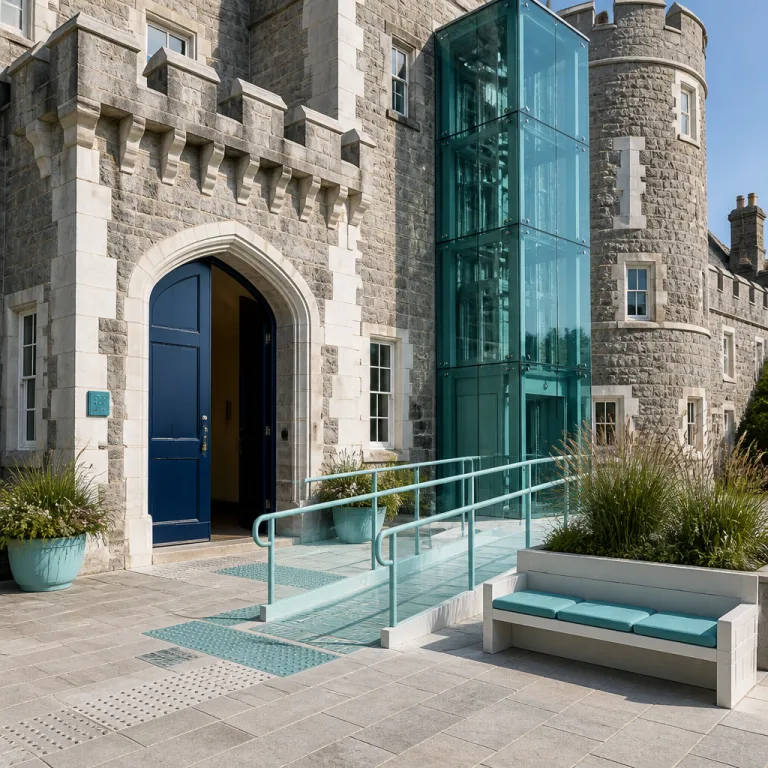
From fortress to welcome: the new language of accessible heritage
Castle hotels were once built to resist entry, not to be accessible. Today a new generation of hoteliers treats accessible castle hotel disability heritage inclusion as a design brief rather than a constraint, reshaping how guests with different needs experience every stay. This shift touches every part of the travel journey, from the first search for an accessible hotel to the last holiday breakfast in the great hall.
For many people using a wheelchair or other mobility aid, the idea of staying in a medieval castle still feels unrealistic. Narrow staircases, uneven stone and distant estate grounds can make even a short day on site exhausting, so clear accessibility information becomes as important as the wine list. When properties share precise details about step free routes, accessible rooms and accessible bedrooms, guests can plan with care instead of hope.
Heritage regulations add another layer of complexity for any castle accessible project. Listed status often limits structural changes, which means teams must balance conservation with inclusive accessible solutions that still feel elegant. The most thoughtful estates work with access consultants and disabled community groups to map every doorway, courtyard and tower, then decide where portable ramps, equipment hire options or accessible estate vehicles will genuinely improve access.
Across Europe, the regulatory landscape is tightening as accessibility requirements for hospitality become more explicit. The European Accessibility Act, for example, pushes hotels to think beyond a single wheelchair accessible room and towards a fully accessible guest journey, even when heritage exemptions apply. For castle owners, this is less about ticking boxes and more about reimagining the guest experience so that disabled guests are not treated as an afterthought.
Inside the walls: how leading castle hotels adapt without losing character
Inverlochy Castle in the Scottish Highlands illustrates how a historic property can embrace accessible travel without diluting its sense of place. By joining the Accessible Hospitality Alliance, the hotel committed to a structured review of every aspect of the guest experience, from booking scripts to the angle of portable ramps at the front steps. That work now informs how the team talks about accessible castle hotel disability heritage inclusion with prospective guests who might otherwise assume the castle is off limits.
On arrival, wheelchair users are guided to level entry points and ground floor suites that offer accessible rooms with wider doors, lower peepholes and adapted bathrooms. Some suites include a roll in shower with a removable shower chair, while others can be equipped on request through local equipment hire partners who understand specialist needs. Staff are trained to offer accessible assistance discreetly, whether that means arranging mobility scooters for the estate paths or planning a shorter route to the dining room for guests who tire easily.
The castle grounds present a different challenge, especially when paths cross steep banks or protected woodland. Here, accessible estate vehicles with ramped access allow disabled guests to explore the lochside and gardens without tackling rough terrain, and drivers are briefed to provide support without rushing people. Seasonal weather matters too, because rain and frost can turn cobbles into hazards, so the team now inspects step free routes several times a day during busy holiday periods.
Communication is where many heritage hotels still fall short, even when the physical offer accessible features is strong. Clear pre arrival emails that outline accessible bedrooms, disabled parking locations and any remaining barriers help guests decide whether the property truly matches their accessibility requirements. For travelers comparing options across regions, guides to refined stays such as the one on how to use the main phone number for a luxury property in Utrecht can serve as a model for transparent, human centered information about access and assistance.
Seasonal stays: planning an inclusive castle holiday this year
Peak castle season runs from late spring into early autumn, when long evenings make it easier to explore extensive estate grounds. For disabled travelers, this period also offers the best combination of daylight, stable weather and staff capacity to provide tailored assistance throughout each day. If you are planning an accessible travel itinerary that includes a castle hotel, start conversations early so the team can align your stay with their most accessible rooms and services.
Summer brings outdoor dining, courtyard concerts and national park excursions that can be magical when accessibility is thoughtfully handled. Properties near landscapes such as the Yorkshire Dales or the Cairngorms often coordinate with park rangers to identify wheelchair accessible viewpoints, step free visitor centers and accessible travel routes for guests who want to experience nature without unnecessary strain. When a castle hotel sits inside or beside a national park, ask specifically about accessible estate vehicles, mobility scooters and any equipment hire partners they trust.
Swinton Estate in North Yorkshire, for example, operates as both a country house hotel and a gateway to moorland and woodland trails. While not every path is fully accessible, the team has mapped routes that work for many wheelchair users and guests with limited stamina, and they explain clearly where gradients become challenging. During busy holiday weekends, they also monitor disabled parking bays and ground floor entrances more closely, ensuring that people who need proximity and level access are not competing with casual day visitors.
Urban heritage properties face different pressures, especially a hotel in London housed within a historic castle like structure or adjacent fortress walls. Space constraints can limit the number of accessible bedrooms, but central locations often mean better public transport links and smoother pavements for wheelchair users navigating the city. When researching a stay, use detailed contact points such as a dedicated reservations phone line, similar in spirit to a refined stay booking guide for Utrecht, to ask about shower chair availability, step free routes from station to lobby and any seasonal works that might affect access.
Booking with confidence: what to ask before you reserve a castle stay
The biggest complaint from disabled travelers is not always about stairs or narrow doors ; it is about uncertainty. Many castle hotels still present romantic photography without a single reference to accessible castle hotel disability heritage inclusion, leaving guests to guess whether they will manage the stay. To avoid that, treat the booking process as part of your accessibility strategy rather than a formality.
Start by emailing or calling to outline your specific accessibility requirements in clear, practical terms. Ask whether the property has fully accessible routes from car park to reception, whether disabled parking is reserved and how far it sits from the main entrance, and whether any ground floor rooms can be configured as accessible bedrooms with appropriate grab rails and space to turn a wheelchair. Clarify whether bathrooms include a fixed or portable shower chair, and whether staff can arrange equipment hire or mobility scooters through local providers if you need more specialized support.
Next, request a simple access statement that covers step free entrances, lift dimensions, corridor widths and any unavoidable barriers such as single steps or heavy doors. A hotel that takes care with this document usually takes care with the on site experience, because it signals that the team has walked the estate with disabled guests in mind. If the property claims to be award winning for accessibility, ask which organization granted the recognition and whether it focused on physical access, staff training, or broader community engagement.
Finally, consider how the castle positions itself within the wider travel community. A property that talks openly about accessible travel, supports disabled staff and invites feedback from guests is more likely to keep improving its offer accessible over time. When you see the same thoughtful language about inclusion across different destinations, from a castle honeymoon guide in Mykonos to a detailed explanation of how to use a main phone number for a refined stay in Utrecht, you can be more confident that accessibility is treated as an ongoing commitment rather than a seasonal marketing line.
FAQ
How can I check whether a castle hotel is genuinely accessible before booking ?
Ask the hotel for an up to date access statement that lists step free routes, lift sizes, doorway widths and any unavoidable steps or narrow passages. Request photos or short videos of accessible rooms, bathrooms and entrances, and confirm details such as disabled parking distance, availability of a shower chair and whether any accessible bedrooms are on the ground floor. If staff answer quickly and specifically, it is a strong sign that accessibility is integrated into daily operations rather than treated as an afterthought.
What should wheelchair users prioritize when choosing a castle stay ?
Focus first on how you will enter and move around the property, then on the room itself. Check that there is a wheelchair accessible route from arrival point to reception, dining spaces and at least one lounge, and ask whether doors are powered or manually heavy. In the room, confirm bed height, turning circles, bathroom layout and whether any equipment hire such as hoists or mobility scooters can be arranged locally if needed.
Are heritage exemptions a barrier to improving accessibility in castles ?
Heritage protections can limit structural changes, but they rarely prevent all forms of adaptation. Many castles use reversible solutions such as portable ramps, temporary handrails, adjusted furniture layouts and accessible estate vehicles to improve access without damaging historic fabric. The most effective properties work with conservation officers and disability consultants together, finding compromises that respect both the building and the people who want to stay in it.
Do accessible castle stays cost more than standard rooms ?
Pricing policies vary, but accessible rooms in luxury properties are usually aligned with equivalent non adapted categories. Some estates invest heavily in accessible bathrooms and technology, yet choose not to surcharge because they see accessibility as part of core hospitality rather than a premium extra. When rates do differ, it is often due to room size or view rather than the presence of grab rails or step free access.
What seasonal factors affect accessibility at castle hotels ?
Weather has a major impact on outdoor routes, especially where paths cross grass, gravel or cobbles that become slippery in rain or ice. During peak holiday seasons, higher guest numbers can also put pressure on disabled parking bays, lifts and accessible toilets, so advance communication with the hotel is essential. Many properties now schedule extra checks of ramps, lighting and signage during busy periods, which can significantly improve the day to day experience for disabled guests.