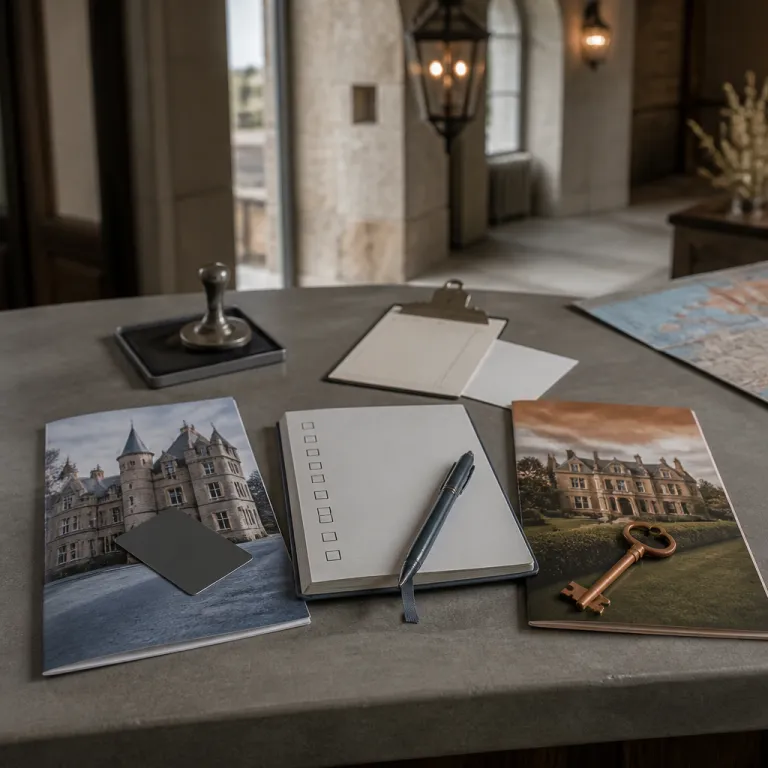
Castle hotel vs country house heritage stay: what the walls really promise
Choosing between a castle hotel and a country house heritage stay shapes every moment of your trip. A true castle hotel occupies a fortified stronghold with medieval or early modern origins, where towers, arrow slits, and thick stone walls still define the architecture. By contrast, a country house stay usually unfolds in a Georgian or Victorian manor built for comfort and display rather than defense.
When you weigh a castle hotel against a country house retreat, you are really balancing atmosphere against ease. A historic castle stay offers drama, moody corridors, and the sense that centuries of history are layered beneath each flagstone, while a country house hotel leans into symmetry, large sash windows, and gracious lawns. Many travelers assume castles always deliver the highest level of luxury, yet the most refined heritage accommodation can just as easily be found in understated country houses and compact manor houses.
Across the United Kingdom, there are far fewer castle hotels than country house hotels, which affects both availability and price. Recent survey data suggests there are in the region of 45 castle hotels in the UK compared with roughly 150 country house hotels, so castle stays are naturally more scarce and often more expensive. This scarcity means that when you book a castle stay in Ireland or Scotland, you should plan your accommodation well ahead, especially if you want specific rooms with poster beds or a particular dining room outlook.
Travel advisors often summarise the choice in simple terms. “What is a castle hotel?” and “What is a country house hotel?” may sound like basic questions, yet the answers matter when you are planning a stay that balances heritage and comfort. “How to choose between a castle and country house hotel?” comes down to your priorities for history, luxury, and the wider country landscape you want to explore.
- Room size: castles often have smaller, quirkier rooms; country houses usually offer larger, more regular spaces.
- Comfort: manor houses tend to provide more predictable heating and plumbing; castles can feel cooler and more atmospheric.
- Price premium: authentic castle hotels frequently cost around 20–30% more than similar country house hotels in the same area.
- Availability: with fewer castle properties across the United Kingdom, peak dates and signature suites sell out earlier.
How to read the architecture: castle, country house, manor, and hybrids
Architecture is your most reliable guide when you are deciding between a fortified castle hotel and a gentler country house heritage stay. A genuine castle hotel occupies a structure that began life as a defensive castle, often a many-century fortress with towers, battlements, and walls thick enough to mute modern noise. A country house hotel, by contrast, usually sits in a landscaped country estate, with a façade that reads more like a grand family residence than a fortress.
In Ireland and Scotland, you will also encounter the term Scottish castle or fortified manor house, which signals a hybrid between a castle and a country house. These properties might have a medieval tower or keep at the core, wrapped in later wings that add larger rooms, better light, and more comfortable circulation. When you book heritage accommodation in the United Kingdom, pay attention to whether the property describes itself as a castle, a country house, a manor house, or a fortified Scottish castle, because each label hints at different compromises between history and comfort.
For travelers who care as much about wine lists as about walls, some estates blur the lines even further. A restored centuries-old castle might now operate more like a country house hotel, with a contemporary spa wing and fine dining that rivals urban restaurants, while a manor house in wine country can feel almost palatial. If you are curious about how estates balance architecture, gastronomy, and heritage, a piece such as this guide to castle wine country and estate vintages shows how the age of the stones and the age of the cellar interact.
When you walk into the entrance hall, details confirm whether the marketing matches reality. A real castle stay will usually reveal uneven stone thresholds, narrow spiral stairs, and perhaps a great hall that still functions as a dining room, while a country house stay tends to open into a broad staircase, polished wood floors, and drawing rooms arranged for conversation. If the building feels like a modern hotel with a turret pasted on, you are probably not in a true castle hotel property, no matter what the brochure claims.
Guest experience: atmosphere, comfort, and the reality of historic rooms
From a guest perspective, the decision between a castle hotel and a country house heritage stay is really about how you want to feel from morning to night. In a castle hotel, rooms are often carved from former bedchambers or servants’ quarters, which means quirky layouts, deep window seats, and sometimes compact bathrooms tucked into former garderobes. A country house hotel usually offers larger rooms with higher ceilings, more consistent heating, and views that sweep across the country estate rather than down into a courtyard.
In Ireland, properties such as Castle Leslie, Cabra Castle, and Barberstown Castle illustrate how varied castle stays can be. At Castle Leslie, some rooms in the main house feel like a classic country house stay with poster beds and lake views, while others in the older wings lean closer to a castle stay with thicker walls and creaking corridors. Cabra Castle mixes a nineteenth-century castle shell with modern hotel comforts, and Barberstown Castle blends a medieval tower with later manor house additions, so each stay experience shifts subtly between fortress and family house.
Scotland offers a similar spectrum, from intimate Scottish castle hotels to grand hotels Scotland properties that feel more like country houses with turrets. In a traditional Scottish castle, you may trade a perfectly square room for one that curves around a tower, yet gain a sense of history that no new hotel can replicate. If you prefer long soaks in deep baths, bright rooms, and predictable heating, a country house or manor house in Scotland or elsewhere in the United Kingdom will usually serve you better than the most atmospheric castle stay.
Public spaces also shape your perception of luxury and heritage. A castle hotel might centre life around a great hall or panelled dining room, where fine dining unfolds beneath antlers and portraits, while a country house hotel often spreads guests across several salons, libraries, and morning rooms. For travelers who enjoy urban heritage conversions as well, the transformation of Admiralty Arch into a Waldorf Astoria, explored in this feature on what a Grade I conversion delivers, shows how carefully curated public rooms can make a historic building feel both grand and genuinely livable.
Price, value, and how to match property type to your trip
When you compare prices for a castle hotel and a country house heritage stay, you will usually see a clear pattern. A genuine castle hotel, especially in Ireland or Scotland, often commands a premium of around twenty to thirty percent over a comparable country house hotel in the same region. That uplift reflects scarcity, higher maintenance costs for castles, and the simple fact that many travelers are willing to pay more for the drama of staying in castles that once guarded a river crossing or a coastal approach.
Value, however, is not only about the nightly rate you pay for accommodation. A country house stay can deliver more generous rooms, better soundproofing, and often more inclusive packages, such as dinner, bed, and breakfast with access to gardens and leisure facilities, which makes the overall stay feel more relaxed. For solo travelers, a smaller manor house or fortified manor can be the best balance, offering heritage accommodation with a sociable scale and staff who quickly learn your preferences in the dining room and bar.
Matching property type to trip style is where an accommodation guide earns its keep. Couples seeking a dramatic proposal backdrop or an anniversary with maximum theatre should lean toward a castle stay, ideally in a many-century castle with poster beds and candlelit fine dining, while families often do better in a country house with interconnecting rooms and lawns for children to roam. Solo explorers who want character without isolation may find that a compact manor house in the United Kingdom, or one of the more intimate hotels Ireland and hotels Scotland options, offers the right mix of history, safety, and human scale.
For those planning multi-stop itineraries that mix heritage with city breaks, it can be helpful to alternate property types. You might book one or two nights in a remote Scottish castle, then shift to a country house closer to transport links, and finish with an urban heritage hotel, perhaps one of the more characterful properties highlighted in this curation of exceptional and unique hotels for a memorable stay. Thinking in terms of rhythm, rather than chasing only castles or only country houses, usually produces a more balanced trip.
How to vet marketing claims and avoid heritage disappointment
Marketing language around a castle hotel or country house heritage stay can be slippery, so you need to read carefully. Many hotels in the United Kingdom, Ireland, and Scotland use the word castle in their names even when the building is essentially a Victorian country house with castellated details. That does not make the stay less enjoyable, but it does mean you should verify whether you are booking a true castle stay or a country house stay dressed in romantic branding.
Start with the property’s history section and cross-check dates and functions. If the building is described as a nineteenth-century hunting lodge or a former manor house that was remodelled with turrets, you are probably looking at a country house hotel with castle styling rather than a medieval castle hotel, while references to sieges, keeps, and defensive walls usually indicate a more authentic castle origin. Pay attention to whether the hotel mentions specific centuries, such as a thirteenth-century castle core with later wings, because that level of detail often signals genuine heritage accommodation rather than vague storytelling.
Guest photos and floor plans reveal even more than polished marketing images. In a real castle hotel property, you will often see thick internal walls, irregular corridors, and rooms with deep window recesses, whereas a country house hotel tends to show long, straight corridors and more uniform room shapes. Look also at the dining room and public lounges; a castle stay will often feature vaulted ceilings, stone fireplaces, and perhaps a great hall used for fine dining, while a country house stay leans toward plaster ceilings, chandeliers, and drawing rooms arranged around garden views.
Finally, read independent reviews with an eye for specifics rather than adjectives. Travelers who mention climbing spiral stairs to reach their room, hearing the wind in the battlements, or sleeping in poster beds set into alcoves are usually describing a genuine castle stay, while comments about sweeping drives, croquet lawns, and afternoon tea in the library point more toward a country house or manor house. If you see repeated complaints about draughty rooms and uneven heating, remember that such quirks are part of life in many castles, and decide whether your idea of luxury aligns more with raw history or with the polished comfort of the best country house hotels.
Planning your heritage itinerary in Ireland, Scotland, and across the United Kingdom
Once you understand the spectrum from fortified castle hotel to gracious country house heritage stay, you can start to design an itinerary that plays to each strength. In Ireland, a classic route might combine a night or two at Castle Leslie, where the main house channels a country house stay and the older sections nod toward a castle stay, with time at Cabra Castle, which offers a more overt castle hotel experience. Adding Barberstown Castle near Dublin introduces yet another layer, blending a medieval tower with later manor house wings and giving you three distinct interpretations of heritage accommodation in a single trip.
Scotland invites a similar mix of Scottish castle and country house experiences. You might begin in a compact Scottish castle in the Highlands, where a handful of rooms cluster around a stone staircase, then move to one of the larger hotels Scotland properties on a lochside estate that feels more like a country house hotel with turrets. Along the way, you can compare how each stay balances history, luxury, and practical comforts such as heating, water pressure, and the size of your room.
Across the wider United Kingdom, heritage travelers are increasingly blending rural castle stays with urban nights in historic city hotels. A long weekend could pair a thirteenth-century castle stay in Wales, complete with poster beds and a great hall dining room, with a final night in a converted city landmark that shows how heritage can be adapted for modern life. Whatever route you choose, the key is to book early for the best availability, check seasonal offers, and consider how accessible each accommodation will be in terms of transport and your own appetite for remote country locations.
As demand for heritage stays grows, so does the range of accommodation on offer. Eco-conscious travelers can now find both castle hotels and country house hotels that invest in energy-efficient systems and local sourcing, while experiential travelers can choose stays that foreground activities such as falconry, foraging, or historical tours. By treating your accommodation guide as seriously as your sightseeing list, you ensure that every stay, whether in castles, country houses, or manor houses, becomes part of the story you will remember.
Key figures and trends in castle and country house stays
- There are estimated to be around 45 castle hotels in the United Kingdom compared with approximately 150 country house hotels, according to survey data reported by Best Staycations and cross-checked against national heritage listings, which means castle stays are significantly rarer and often more expensive.
- Heritage properties that market themselves as castle hotels typically charge around twenty to thirty percent more per night than comparable country house hotels in the same region, reflecting both scarcity and higher maintenance costs for castles.
- Demand for heritage accommodation has risen in recent years, with experiential travel and interest in history driving more travelers toward castle stays and country house stays across Ireland, Scotland, and the wider United Kingdom.
- Booking data from specialist travel agencies shows that travelers who plan at least three months ahead secure a wider choice of rooms, including suites with poster beds and premium views, especially in high season.
- Eco-friendly upgrades, such as improved insulation and modern heating systems, are becoming more common in both castles and country houses, helping to narrow the comfort gap between centuries-old walls and contemporary hotels.
FAQ about choosing between a castle hotel and a country house stay
What is a castle hotel?
A castle hotel is a hotel located within a historic castle, usually a fortified structure with medieval or early modern origins. These properties often retain original features such as towers, thick stone walls, and great halls, which give a castle stay its distinctive atmosphere. Guests should expect characterful rooms, sometimes with quirks in layout and heating, rather than the uniformity of modern hotels.
What is a country house hotel?
A country house hotel is a hotel situated in a historic country house, typically Georgian or Victorian in style and designed for comfort rather than defense. Rooms in a country house stay are usually larger and brighter than in castles, with more consistent heating and plumbing. These hotels often sit within landscaped grounds, offering a relaxed, residential feel and easy access to outdoor activities.
How should I choose between a castle and a country house hotel?
You should consider your priorities for ambiance, amenities, and location when deciding between a fortified castle hotel and a country house or manor house. Choose a castle stay if you want immersive history, dramatic architecture, and do not mind some quirks in room layout or temperature. Opt for a country house if you value larger rooms, predictable comfort, and a calmer, more residential atmosphere.
Are castle hotels always more expensive than country house hotels?
Castle hotels are often more expensive than comparable country house hotels because there are fewer of them and their maintenance costs are higher. In many regions of the United Kingdom, Ireland, and Scotland, a genuine castle stay can cost around twenty to thirty percent more per night than a similar standard of country house stay. However, off-season rates and midweek offers sometimes narrow this gap, so it is worth checking several dates before you book.
What should I look for when booking heritage accommodation online?
When booking heritage accommodation, read the property’s history section carefully and look for clear references to whether it began as a castle, country house, or manor house. Check guest photos for clues such as stone walls, spiral stairs, or large sash windows, and pay attention to comments about room size, heating, and noise. Finally, compare several hotels Ireland, hotels Scotland, and wider United Kingdom options to see which combination of history, luxury, and location best matches your trip.
Sources and further reading
- Best Staycations – survey data on the number of castle hotels and country house hotels in the United Kingdom (figures cross-checked against national tourism and heritage listings, accessed 2024).
- National Trust (UK) – background information on the history and architecture of country houses and castles, including guidance on adaptive reuse of historic estates.
- Historic Environment Scotland – guidance on the conservation and adaptive reuse of Scottish castle properties, with case studies on maintaining comfort in historic buildings.