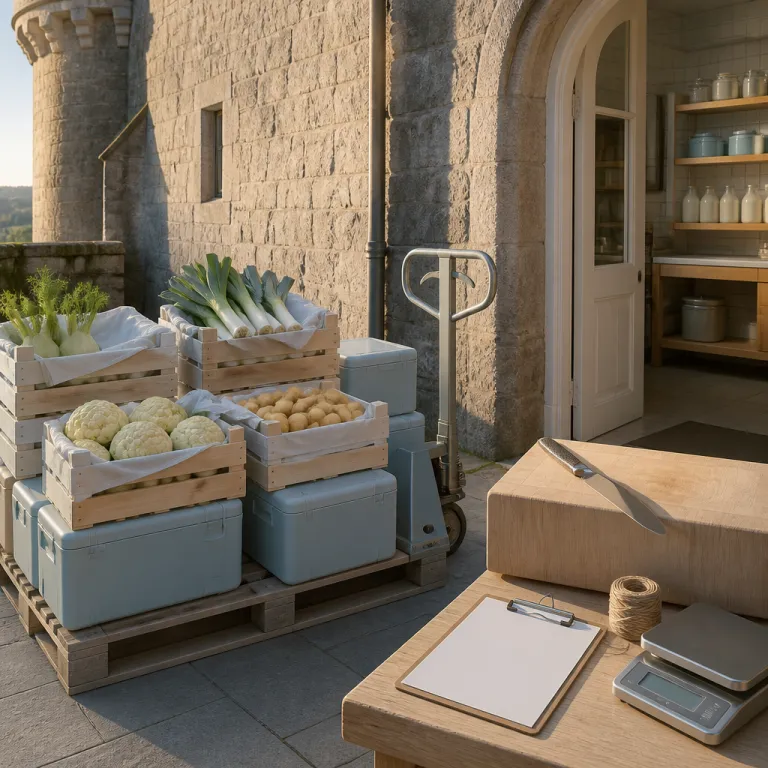
When ‘local’ means fifty miles away: rural castle hotel logistics
At many castle hotels, the phrase “locally sourced” hides a long road. In the Scottish Highlands or along the Welsh borders, a single hotel may sit more than 80 kilometres from the nearest wholesale suppliers, so the castle hotel local sourcing food supply chain stretches across moorland, single track lanes, and tiny harbours. For guests, that distance shapes everything from the breakfast eggs to the late night food beverage options in the bar.
In this rural hospitality industry context, procurement is less about ticking boxes on a central system and more about knowing which farmers will answer the phone in a storm. The hospitality procurement teams working for these hotels must balance reliable supply with fragile country roads, short shelf lives for perishable goods, and the reality that one broken bridge can disrupt the entire supply chain overnight. That is why risk management in castle hotel procurement is as much about geography and weather as it is about contracts and prices.
Because these businesses rarely operate like anonymous restaurant resort chains, their supply chains depend on a patchwork of local suppliers and regional distributors. A single castle hotel might buy game and herbs from the estate, root vegetables from a nearby farm, and dairy from a cooperative 60 kilometres away, while other hotels in the same group share only a few common suppliers to avoid overloading small producers. For you as a guest, the castle hotel local sourcing food supply chain means menus that change with the road conditions as much as with the seasons.
Inventory management in this setting becomes a quiet art rather than a spreadsheet exercise. Chefs and hotel operations managers must track goods in almost real time, because a missed delivery can empty the larder faster than in city hotels with multiple locations and backup wholesalers. When you see a short menu in a rural castle restaurant, it often reflects careful purchasing decisions designed to protect food safety and quality control, not a lack of ambition.
From walled garden to plate: what estates can realistically provide
Walk through a working castle estate and you quickly see the limits of self sufficiency. The castle hotel local sourcing food supply chain usually starts in the kitchen garden, where herbs, soft fruits, and seasonal vegetables thrive within old stone walls, but it rarely ends there. Estate management teams know that even the most productive plots cannot supply all the food a modern hospitality business requires for full occupancy.
Most castles can rely on their own land for game in season, honey from a few hives, and perhaps eggs from a modest flock, yet they still depend on external suppliers for dairy, flour, and many proteins. For a hotel that serves both resident guests and day visitors, the volume of goods services needed for breakfast buffets, afternoon teas, and formal dinners quickly exceeds what the estate can grow without compromising biodiversity. This is where thoughtful sourcing and hospitality procurement step in, linking the estate’s strengths with a wider supply chain that respects the landscape rather than exhausting it.
Menu design becomes a weekly negotiation between what the land offers and what the supply chains can deliver on time. The most accomplished castle chefs build dishes around estate produce first, then use hotel procurement networks to fill the gaps with responsibly farmed meat, sustainable fish, and specialist ingredients. If you want a deeper look at how this “estate to table” promise works in practice, the guide on what castle hotel dining actually delivers explains how different properties balance romance with operational reality.
Behind the scenes, purchasing and inventory systems must distinguish clearly between estate grown goods and bought in food beverage supplies. This separation supports transparent communication with the customer, more accurate cost management for the business, and stronger quality control for both perishable goods and preserved items. When a menu lists a vegetable as “from the south garden”, that claim rests on disciplined hotel operations, not just poetic language.
The human network: farmers, fishermen, foragers and supplier relationships
Every memorable castle dinner rests on a web of human relationships. In remote hospitality, the castle hotel local sourcing food supply chain depends on small scale farmers, coastal fishermen, and specialist foragers who know the land and sea better than any central database. These suppliers often work with several hotels at once, yet a single castle can represent a crucial anchor customer that stabilises their income across the year.
From the hospitality industry side, procurement teams and head chefs invest time in building supplier relationships that go beyond transactional purchasing. They visit farms to understand animal welfare, walk fields to see how vegetables cope with local weather, and sometimes adjust hotel menus when a grower’s crop fails rather than switching instantly to anonymous imports. This approach to hospitality procurement may increase short term costs, but it strengthens the long term resilience of the supply chain and supports better food safety outcomes.
For the producers, working with castle hotels offers prestige, predictable demand, and the chance to see their food presented in a refined restaurant resort setting. For the hotels, these local suppliers provide exclusivity, traceability, and stories that enrich the guest experience at the table. Some of the most lauded properties, the kind you find in features on castle hotels where you dine better than you sleep, are those that treat supplier relationships as part of their cultural heritage rather than a line item in a contract.
This human centred supply chain also shapes purchasing decisions and risk management strategies. When a storm keeps fishing boats in harbour, a chef who knows the skipper personally will hear about it in real time and can adjust the menu before the guest even sits down. That level of communication allows hotels with multiple locations to maintain consistent standards while still reflecting the nuances of each local food ecosystem.
Menu engineering, cost realities and what guests should expect
For couples booking a romantic stay, the menu is often as important as the room key. Yet the castle hotel local sourcing food supply chain means that what appears on your plate is shaped by cost structures, logistics, and quality control as much as by culinary imagination. Genuine local sourcing typically adds a noticeable premium to food costs compared with standard hotel procurement that relies on large distributors.
Industry data and operator interviews show that relying heavily on local suppliers can increase ingredient costs by roughly 15 to 25 percent compared with mainstream hospitality supply chains. That uplift reflects smaller production runs, longer delivery routes, and the extra labour involved in handling perishable goods that arrive in varied sizes and conditions rather than uniform boxes. For the hospitality business, these higher purchasing costs must be balanced against room rates, restaurant pricing, and the overall guest experience promised in marketing.
Chefs respond by engineering menus that minimise waste and maximise flavour, often using the same goods across several dishes to keep inventory lean. A single side of Highland beef might appear as a grilled main course, a tartare starter, and a slow cooked dish for the bar menu, each tailored to different customer expectations. When you read a concise menu in a castle dining room, you are seeing the visible tip of a complex management effort that aligns food beverage supply, labour, and hotel operations.
For travellers, the practical takeaway is clear ; if a castle hotel advertises deep local sourcing yet offers strawberries in mid winter and the same menu every night, something in the supply chain story does not quite add up. By contrast, properties that explain seasonal changes, occasional shortages, or last minute substitutions are usually the ones applying best practices in hospitality procurement and food safety. Their transparency signals a mature approach to risk management and a respect for both the land and the guest.
Systems, sustainability and how guests can read between the lines
Behind the romance of candlelit halls, modern castle hotels run quietly sophisticated systems. The castle hotel local sourcing food supply chain now often plugs into digital inventory tools that track goods in real time, flagging when perishable goods from local suppliers need to be used quickly or preserved. These tools help align hotel operations with sustainability goals by reducing waste and tightening quality control.
For properties spread across multiple locations, shared data on purchasing and stock levels allows each hotel to support the same regional producers without overwhelming them. Central management can coordinate hospitality procurement so that one restaurant resort orders lamb while another focuses on venison, smoothing demand for small farms and improving overall supply chain resilience. This kind of joined up operations thinking is where sustainability moves from marketing language to measurable practice.
As a guest, you can read the signals. Menus that name farms, fishing boats, or specific gardens usually indicate direct supplier relationships rather than generic supply chains, especially when staff can explain those links confidently. If you are curious about how far the castle goes, ask how they handle food safety for wild game, what proportion of their food beverage spend goes to local suppliers, and how they adapt purchasing decisions when the weather disrupts deliveries.
Thoughtful properties will often connect their culinary ethos with wider wellness and environmental initiatives on the estate. You might see the same philosophy in how they manage woodland, run kitchen garden tours, or design outdoor wellness experiences such as the cold water rituals highlighted in this feature on courtyard cold plunges and outdoor wellness at castle hotels. When the story feels coherent from plate to parkland, you are usually looking at a hospitality business where sourcing, operations, and guest experience pull in the same direction.
FAQ
How local is “local” when a castle hotel is in a remote area ?
In remote regions, “local” for a castle hotel often means sourcing within roughly 80 to 160 kilometres rather than from the immediate village. Sparse populations and limited suppliers make tighter radiuses unrealistic for a full service hospitality operation. The key is whether the hotel prioritises regional producers and transparent supply chain practices over anonymous global wholesalers.
Can a castle estate really grow all the food it serves to guests ?
Very few castle estates can produce all the food required for modern hotel operations, especially at peak occupancy. Most estates focus on herbs, some vegetables, eggs, honey, and seasonal game, then rely on external suppliers for dairy, flour, fish, and many meats. The most credible properties are open about this mix and explain how they choose partners who align with their sustainability goals.
Why do menus at locally focused castle hotels change so often ?
Frequent menu changes usually reflect the realities of local sourcing and risk management rather than indecision. When chefs depend on small farms and day boat fishermen, availability can shift quickly with weather, harvests, and transport. Updating dishes allows them to maintain food safety, minimise waste, and keep quality high despite variable supply.
Does local sourcing always make castle hotel dining more expensive ?
Local sourcing tends to increase ingredient costs because small producers lack the economies of scale of large distributors. Castle hotels that commit to regional suppliers often absorb part of this cost and pass some on through menu pricing. Guests typically pay more than at chain hotels, but they gain fresher food, stronger provenance, and a more distinctive guest experience.
What should I ask a castle hotel if I care about its food supply chain ?
You can ask what proportion of their food budget goes to local suppliers, how they handle perishable goods and food safety, and whether they adapt menus to seasonal availability. It is also reasonable to ask how they support supplier relationships over time and whether they share producers with other hotels in their group. Clear, specific answers are a strong sign of serious hospitality procurement rather than marketing gloss.