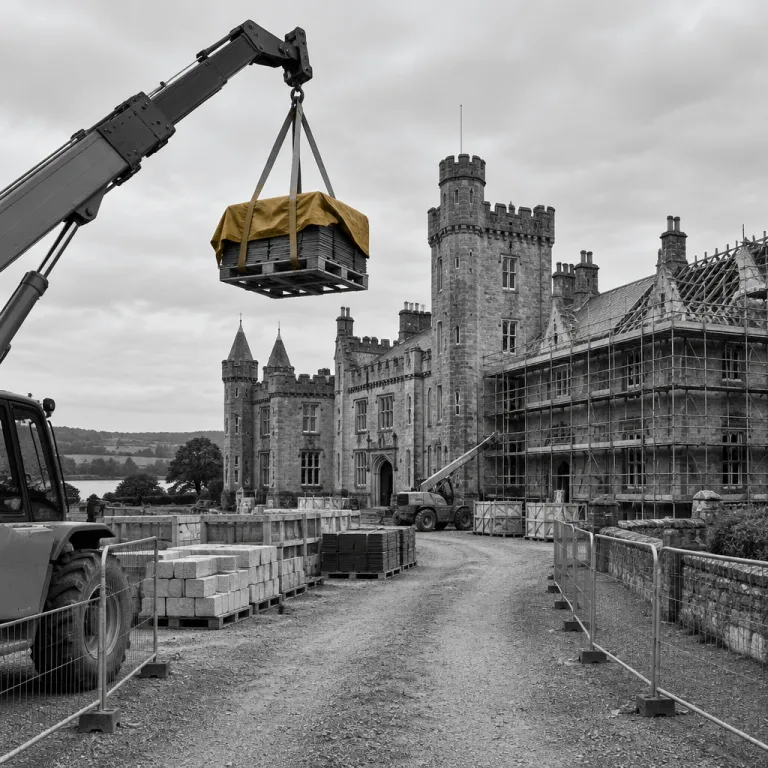
Why an Irish landmark castle will close from shoulder season to shoulder season
Dromoland Castle in county Clare will close in November, stepping out of the spotlight just as the Atlantic winds start to thin the crowds. The Dromoland Castle renovation 2026 is structured as a shoulder season to shoulder season project, so the castle will reopen June at the start of high summer and protect peak revenue while still allowing a deep reset of the estate. For travelers planning a luxury hotel stay in Ireland, that timing opens window after window for smarter travel decisions, from when to book to how to pivot plans toward other castle hotels resorts nearby.
The 500 hectare estate in county Clare has long balanced its role as a historic house of the Ó Brien family and as one of Ireland’s benchmark hotels, and this renovation tests how far that balance can stretch. Since the property became a luxury hotel years hotel ago, its draw has been intimacy as much as grandeur, and the castle will move from 96 guest rooms to 121 accommodations once the project is complete. That scale shift matters for guests who prize quiet corridors, because every extra room changes how hospitality feels in the public spaces and how the view of the estate reads from your window.
Management has framed the Dromoland Castle renovation 2026 as the largest transformation since the castle became a hotel, and the numbers back that up. The project includes a new glass enclosed atrium of around 300 square metres, glass fronted saunas facing the private lake, and two distinct accommodation wings that reframe how guests experience the estate. For travelers who explore Ireland for its layered cultural experiences, the question is not whether the castle will be more luxurious, but whether the irish character of the house and its hospitality will remain legible once the window opens again on reopening June.
From 96 to 121 rooms: when scale meets heritage on a working estate
The Dromoland Castle renovation 2026 is not just about fresh fabrics in a room ; it is about rethinking how a historic castle operates as a modern hotel. The Walled Garden Collection will add 13 new accommodations in converted stables, while a Heritage Collection of 16 guest rooms and five suites will sit together on a dedicated floor inside the main house, and that dual structure raises pointed questions about whether estate collections dilute or enrich the sense of place. For guests who care about lineage, the story still runs back to the O’Brien line and the title of Earl of Thomond, and any expansion has to respect that brien heritage or risk feeling like just another generic luxury property in Ireland.
On paper, the castle will gain capacity without building over its lawns, and planning permission has focused on adaptive reuse rather than new towers. The Walled Garden accommodations keep guests close to the heart of the estate, while the Heritage rooms preserve the creak of original corridors and the view across county Clare that has anchored the house for generations. If you are weighing Dromoland against a stay at Adare Manor or another Irish castle in county Limerick, the key question is whether the extra rooms change the rhythm of hospitality or simply make it easier to secure a reservation during peak travel periods.
Across Europe, listed castles and historic houses face similar pressures when they evolve into full scale hotels resorts, and Dromoland’s project sits squarely in that pattern. For a deeper look at how protected status shapes what can and cannot change in a castle, see our analysis on how listed status shapes your castle stay, which helps explain why a glass enclosed atrium might be acceptable while a new wing on the lake shore would not. When the Dromoland Castle renovation 2026 is complete, guests should ask very specific questions at booking about which part of the estate their room will be in, what original features remain in that section of the house, and how the hotel plans to manage flow between the historic core and the newer collections.
Wellness, glass, and how to read a renovated castle hotel on reopening
One of the clearest signals in the Dromoland Castle renovation 2026 is the investment in wellness and social space, with a new glass enclosed atrium and glass fronted saunas facing the private lake. The enclosed atrium of around 300 square metres will act as a year round gathering space, effectively a contemporary great hall where morning coffee, afternoon tea, and late night drinks share the same filtered view of the estate. For guests used to the older rhythm of the house, this new heart of the hotel will change how hospitality flows, because the atrium opens window like a modern cloister while the original drawing rooms retain their quieter, more irish character.
That focus on light and wellness mirrors a broader trend across castle hotels in Ireland and beyond, from spa wings in Scottish estates to new thermal suites in Loire valley properties, and it is worth comparing how different projects handle it. Our report on Scotland’s most remote luxury opening shows another estate using glass and water to reframe a rugged landscape, while a guide to refined stays in former monasteries, such as the one detailed in this monastery hotel booking guide, underlines how cloistered spaces can feel either contemplative or commercial depending on execution. When Dromoland reopens June after the close November period, guests should ask how the hotel is programming the atrium, whether it is a calm lounge or a constant event space, and how that affects the atmosphere in the older rooms of the house.
There is also a strategic backdrop to the Dromoland Castle renovation 2026, with Ireland preparing to host major events such as the Ryder Cup at Adare Manor and a rising global appetite for high end cultural experiences tied to historic estates. The castle sits near Newmarket on Fergus in county Clare, a location that works well for business leisure travelers who route through Shannon Airport and then explore the Wild Atlantic Way, and that mix of convenience and heritage keeps Dromoland in the top tier of Irish hotels for executive travel. When the window opens on bookings again, treat the reopening as a chance to test how the castle will balance its Ó Brien lineage, its role as a luxury hotel in a competitive field of hotels resorts, and its promise to remain a house where the stone, not just the glass, still tells the story.