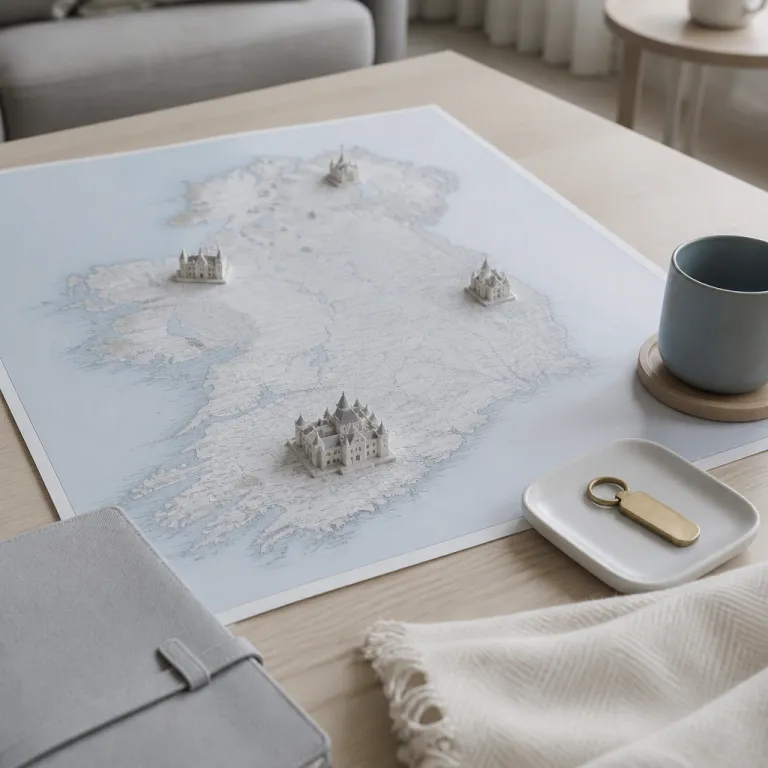
Reading a refined map of Ireland with castles for your stay
A curated map of Ireland with castles is the most powerful planning tool for a luxury stay. When you see each castle location plotted by county, century, and current condition, you immediately understand how to shape an elegant trip across the country. This kind of interactive castles in Ireland map turns a simple holiday into a layered journey through Irish history and elevated hospitality.
On a premium booking website dedicated to Irish castle hotels, the map of Ireland with castles should highlight where each fortress was originally built and how it has been restored for guests. Trim Castle in County Meath, for example, was constructed by Hugh de Lacy in the twelfth century and now stands as one of the most impressive Irish castles open to the public, according to heritage records from the Office of Public Works. When a map clearly distinguishes a medieval tower house, a fortified house castle, and a later century castle residence, you can match your preferred architectural style to the right site and location.
For travellers who value privacy and comfort, the map must show which restored castle properties operate as intimate hotels and which remain atmospheric ruins. Some castles in Ireland are only accessible as heritage sites, while others are fully restored castle retreats with spa suites, fine dining, and private wings for a family or small group. A well designed castle country map of Ireland with castles also indicates driving distances in kilometres, helping you remove unnecessary transfers and plan a realistic route between counties.
From medieval fortresses to luxury suites on the Irish map
When you zoom into a detailed map of Ireland with castles, you see how medieval power shaped the country’s landscape. Over 3,000 castles and fortified houses are scattered across the island, according to estimates from the Heritage Council and academic surveys, which means a thoughtful traveller needs clear filters to choose between ruins, museum style properties open to the public, and fully serviced castle hotels. A premium booking platform should let you sort by county, century, and whether the castle is a tower house, a riverside fortress, or a grand house castle surrounded by parkland.
Many of the most iconic Irish castles began as defensive strongholds and later evolved into refined residences. Bunratty Castle in County Clare, for instance, started as a strategic fortress and now welcomes visitors to explore its great hall and period interiors during the day, while nearby luxury stays reinterpret the medieval mood with modern comfort. Ross Castle on the shores of Lough Leane, Glenarm Castle in County Antrim, and Blackrock Castle near Cork city all appear on quality maps of castles in Ireland, each with a different balance of heritage site access and contemporary hospitality.
Some properties remain family homes yet open selected wings or gardens to guests seeking a more private experience. Glenarm Castle and Tullynally Castle illustrate how a current family can preserve a restored castle while sharing parts of the estate with travellers for events, gardens, or seasonal stays. A specialist booking website should clearly indicate which sections are open to the public, which are reserved for overnight guests, and how each castle built in a different century has been adapted for modern expectations of space, service, and discretion, especially during festive escapes in European castles for Christmas holidays.
Planning a luxury itinerary by county with Ireland’s castles
Using a map of Ireland with castles as your starting point, you can design a county by county itinerary that balances heritage and indulgence. Begin by selecting two or three regions, such as County Clare, County Meath, and County Cork, then look at how the castles in each location relate to airports, coastal drives, and major towns. This approach keeps your trip focused while still allowing you to experience different castle country landscapes, from Atlantic cliffs to gentle inland valleys.
In County Clare, Bunratty Castle offers a vivid sense of medieval life, while nearby luxury properties reinterpret the tower house silhouette with spa suites and fine dining. County Meath centres on Trim Castle, a monumental Norman fortress built with stone masonry and defensive architecture that still dominates the town, and a refined stay nearby lets you enjoy the site by early morning light before the day visitors arrive. In West Cork, Kilcoe Castle, originally built by the MacCarthys of Muskerry, anchors a coastline dotted with characterful house castle conversions and discreet restored castle retreats that suit couples, families, or small groups.
For travellers combining Ireland with other European destinations, a map of Ireland with castles can sit alongside a curated map of Tuscan fortresses or Aegean hideaways. A specialist platform that also highlights where to stay in a four star castle style hotel in Tuscany for a refined escape helps you compare distances, climates, and styles across castle country regions. If you are planning a honeymoon, you might pair a romantic Irish tower house stay with a castle style luxury and sea view romance break on a Greek island, using both maps to choreograph a seamless, story rich journey.
Understanding castle types, centuries, and restoration levels
A sophisticated map of Ireland with castles should do more than drop pins on a screen. It needs to explain whether each castle built on that site is a rugged tower house, a sprawling house castle, or a later century castle residence with landscaped gardens and ornamental lakes. This level of detail helps you align your expectations, especially if you prefer polished interiors over atmospheric ruins or, conversely, want to feel the raw stone of a medieval tower under your fingertips.
Norman era fortresses such as Trim Castle and Swords Castle, built by figures like Hugh de Lacy and John Comyn, introduced a new style of military architecture to Ireland. Later Irish castles, including many in castle county clusters like County Offaly or County Westmeath, evolved into more comfortable homes while retaining defensive features such as towers, curtain walls, and gatehouses. When a booking website labels each property with its original century, you can trace how the country’s political story shaped everything from floor plans to window sizes.
Restoration status is equally important for a discerning guest choosing between castles in Ireland. A fully restored castle with underfloor heating, soundproofing, and contemporary bathrooms offers a very different experience from a partially stabilised ruin that is only open to the public during daylight hours. On a trustworthy platform, each listing should state whether the castle is a restored castle hotel, a private family residence with limited access, or a heritage monument where you can visit the grounds but not stay overnight, and this clarity should sit alongside a transparent privacy policy that explains how your booking data is handled.
Iconic castles on the Irish map and how to stay near them
When travellers first consult a map of Ireland with castles, certain names stand out immediately. Dunluce Castle on the Antrim coast, perched dramatically on a basalt outcrop, is one of the most photographed ruins in the country and a highlight of any castle country road trip. While you cannot usually sleep within its weathered walls, a premium booking website will show nearby restored castle properties and manor houses that echo its atmosphere with sea views and stone lined halls.
Birr Castle in County Offaly offers a different kind of experience, combining a lived in family home, extraordinary gardens, and a history of scientific innovation. Tullynally Castle in County Westmeath remains a private family residence yet opens its grounds and selected interiors to visitors, giving guests a sense of continuity between past and current custodians. A refined map of castles in Ireland should mark these estates clearly, indicating which parts are open to the public, which host events, and where discreet luxury accommodation is available either on site or within a short drive.
Some castles carry the names of historical figures that shaped Irish and British history. King John, for example, ordered the construction of several strategic fortresses, and many Irish castles still bear traces of his era in their layout and defensive features, as noted in standard histories of medieval Ireland. When a booking platform explains these stories alongside each castle location, you gain more than a room for the night; you gain a narrative that links your stay to centuries of political intrigue, family alliances, and architectural change, all mapped clearly across the island.
Practical tips for using a castle map on a luxury booking website
To make the most of a map of Ireland with castles on a luxury booking website, start by setting clear filters. Choose your preferred counties, indicate whether you want only restored castle hotels or are happy to include properties near evocative ruins, and decide how many nights you wish to spend in each location. This helps the system remove unsuitable options and present a curated selection that respects both your time and your standards.
Next, look closely at access and logistics for each castle location. Check driving distances between counties in kilometres, note whether the site is open to the public year round or only seasonally, and confirm if the current family owners live on the estate, which can influence privacy and the style of service. For tower house conversions or compact house castle properties, verify how many suites are available and whether exclusive use is possible for your group, especially if you are planning a celebration or multi generational trip.
Finally, pay attention to the way the booking website handles transparency and trust. A serious platform will provide clear information about when each castle was built, how it has been restored, and what parts of the property are accessible to guests, as well as a detailed privacy policy that explains how your personal data and payment details are protected. When these elements appear directly on the map interface, you can compare Irish castles at a glance and reserve with confidence, knowing that every pin on the map represents both a compelling story and a professionally managed stay.
Key figures and statistics about castles in Ireland
- Over 3,000 castles and fortified houses are scattered across Ireland, according to official tourism data and research cited by the Heritage Council, which means a detailed map of Ireland with castles is essential for narrowing down realistic options for a single trip.
- The main wave of castle construction in Ireland took place between the twelfth and fifteenth centuries, aligning with the Norman invasion and later Gaelic lordship, so most tower houses and early stone fortresses you see on today’s maps date from this medieval period.
- Trim Castle in County Meath, one of the largest Norman castles in Ireland, was built in the twelfth century and now operates as a major heritage attraction that is open to the public with guided tours and seasonal events, as documented by the Office of Public Works.
- Swords Castle near Dublin, constructed around the same era by John Comyn, and Kilcoe Castle in West Cork, built by the MacCarthys of Muskerry in the fifteenth century, illustrate how different regions and families contributed to the dense pattern of castles across the country.
- Many restored castle properties now function as hotels or event venues, reflecting a broader trend in heritage conservation where historic estates are adapted for tourism to fund ongoing maintenance while keeping key areas accessible to visitors.
FAQ about using a map of Ireland with castles for luxury stays
How many castles are there in Ireland and are they all on the map ?
There are over 3,000 castles scattered across Ireland, ranging from intact fortresses to barely visible ruins, and a high quality booking map will focus on those with safe access, clear ownership, and either accommodation or structured visiting options. Not every ruin or earthwork appears, but the most significant Irish castles and restored castle hotels are usually included for practical trip planning.
Can you visit Trim Castle and stay nearby in a luxury property ?
Yes, Trim Castle in County Meath is open to the public with guided tours that explain its Norman origins and defensive design, and several premium hotels and manor houses lie within a short drive. A specialist booking website will show these options on the same map, allowing you to pair daytime exploration of the heritage site with an evening in a refined, fully serviced property.
Who built Swords Castle and what can visitors expect today ?
Swords Castle was built by John Comyn around 1200 AD, and it now serves primarily as a heritage site and event venue rather than a hotel. Visitors can explore its courtyard and surviving buildings during opening hours, while using a broader map of Ireland with castles to locate nearby luxury accommodation for overnight stays.
Are all castles on the Irish map suitable for overnight stays ?
Many castles on a detailed Irish map are historic monuments or family homes that are not configured as hotels, so they are only open to the public for day visits, gardens, or special events. A premium booking platform will clearly label which castles in Ireland offer suites, which are private residences, and which are ruins or museum style sites, helping you avoid confusion when planning your itinerary.
How were most Irish castles originally constructed and why does that matter for guests ?
Most medieval Irish castles were constructed using stone masonry, mortar, and wooden scaffolding, often by local labourers and specialist stonemasons working under Norman or Gaelic lords, and this robust construction still shapes the guest experience today. Thick walls, narrow staircases, and tower house layouts create atmospheric spaces, while modern restorations add heating, lighting, and comfort without removing the essential character that travellers seek in a luxury castle stay.